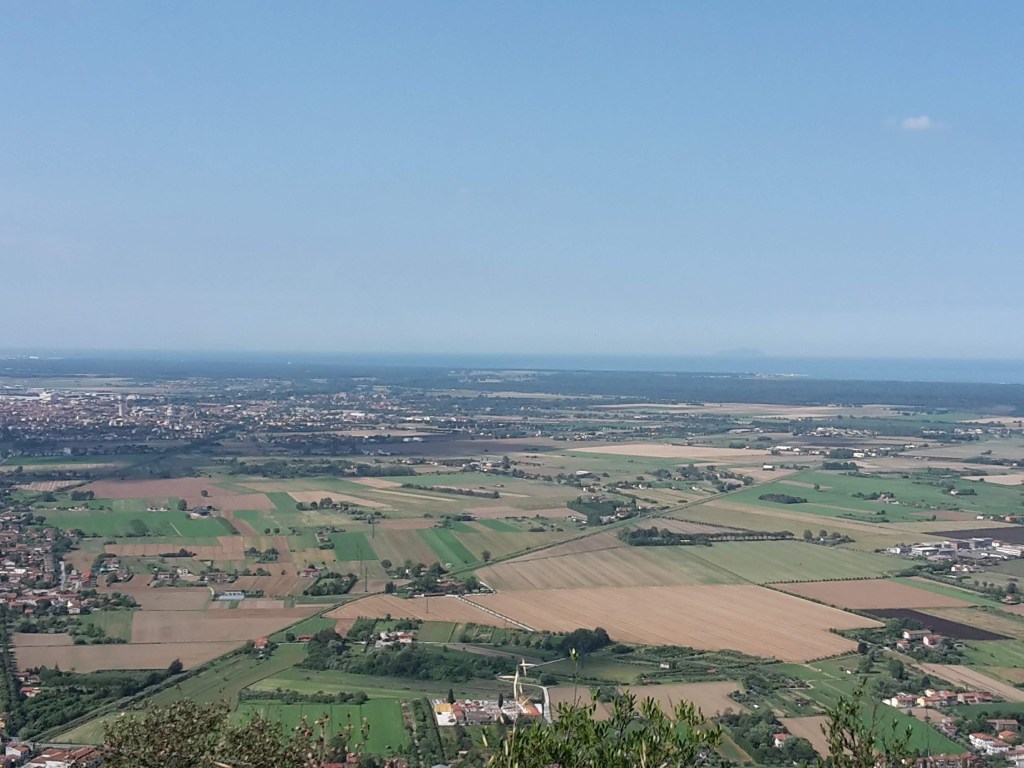
It’s a Friday in June and the alarm goes off before dawn. For about a year, the long ridge walk across Monte Pisano – from Ripafratta, the little castle village between Lucca and Pisa, all the way to Calci – has been on my “to do” list. I prepared for it almost psychologically. Today is the day.
Monte Pisano is the mountain that sits between Pisa and Lucca – Dante himself wrote that it is the reason “the Pisans cannot see Lucca” (Inferno, Canto XXXIII). From Florence it is a bit far for a day hike, but with an early train it is perfectly doable, and the reward is something you don’t get on the hills around Florence: the Mediterranean.
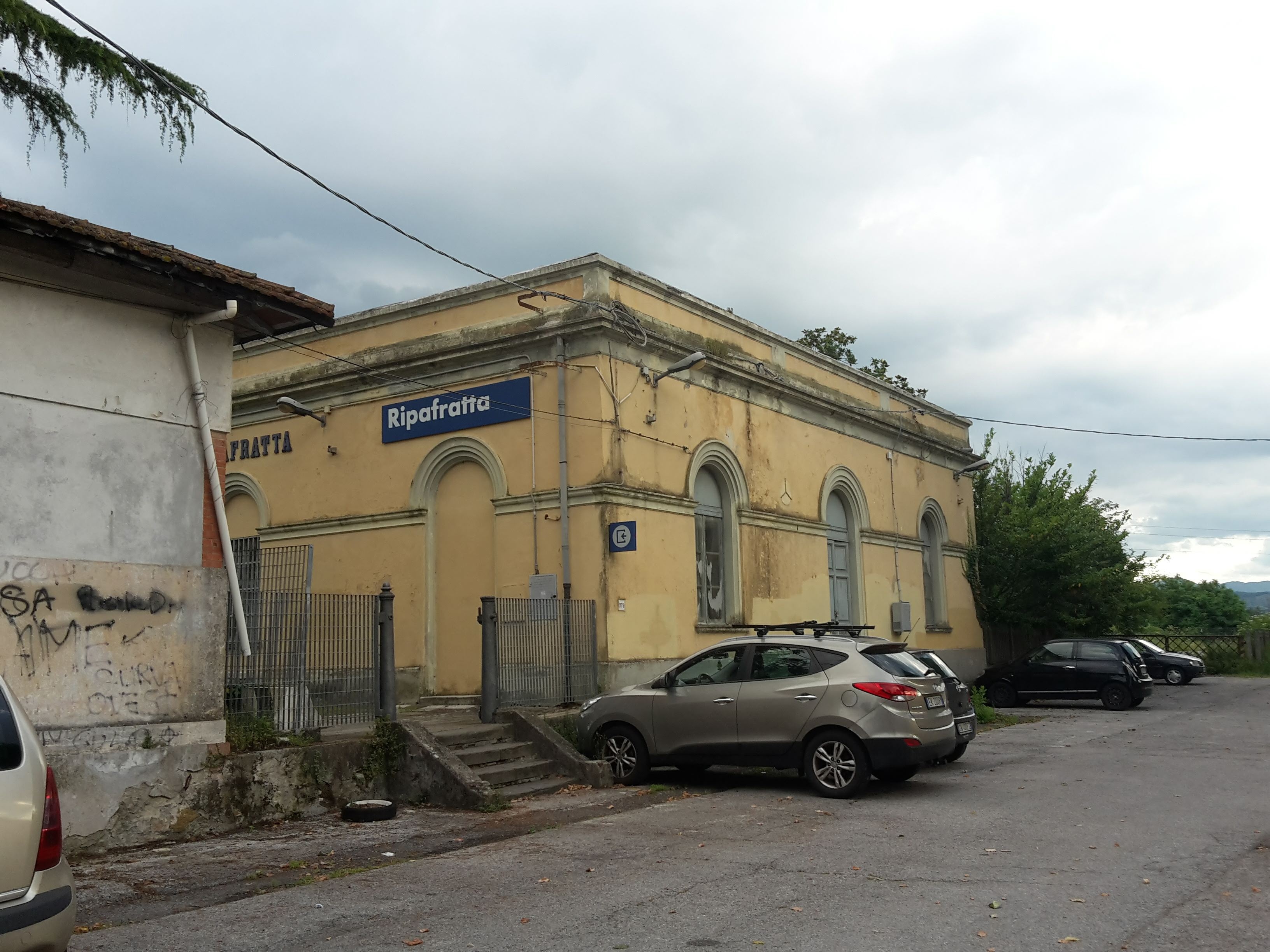
Getting there by train
The trick is to be on the trail early, especially from late spring on, when the sun gets strong on the open ridges. From Florence there are two good options, and no need for a car:
- The early one (my choice): the 5:00am regional train from Firenze Santa Maria Novella to Lucca (arrives 6:38), then change for the 6:52 train towards Pisa. Ripafratta is the first stop, 6 minutes later (6:58). Two hours door to door and you start walking at 7am, just like I did.
- No change, a bit later: the 6:03am regional train from Florence goes through Lucca and continues to Pisa, stopping at Ripafratta at 8:01.
Going via Pisa Centrale is slower, and the bus to Lucca doesn’t save any time, so I’d stick with the train. Ripafratta is a small unstaffed station, but trains between Lucca and Pisa stop there roughly every half hour to hour during the day. Check the early connections the day before: several of them don’t run on Sundays and holidays.
Ripafratta and the first climb
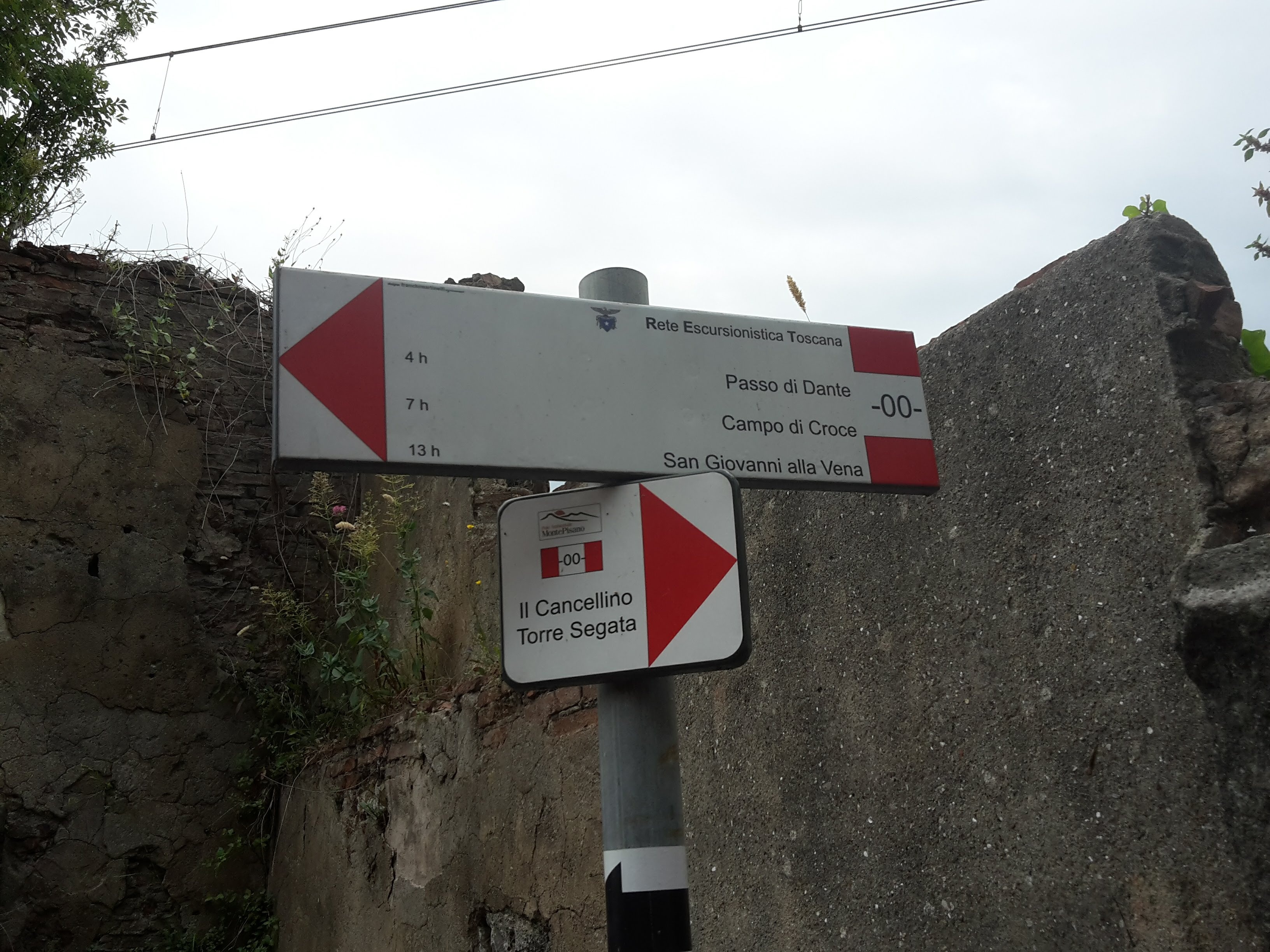
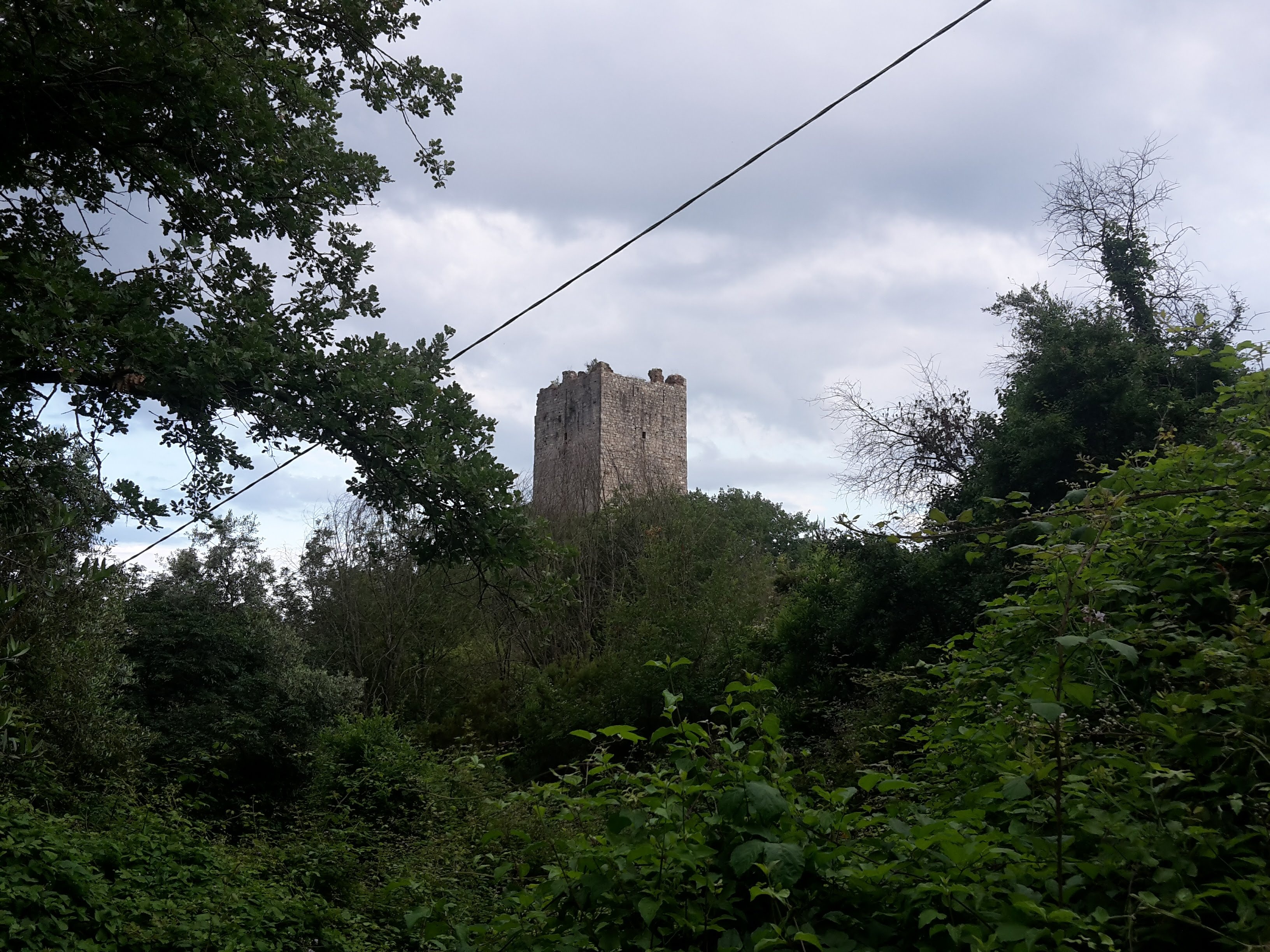
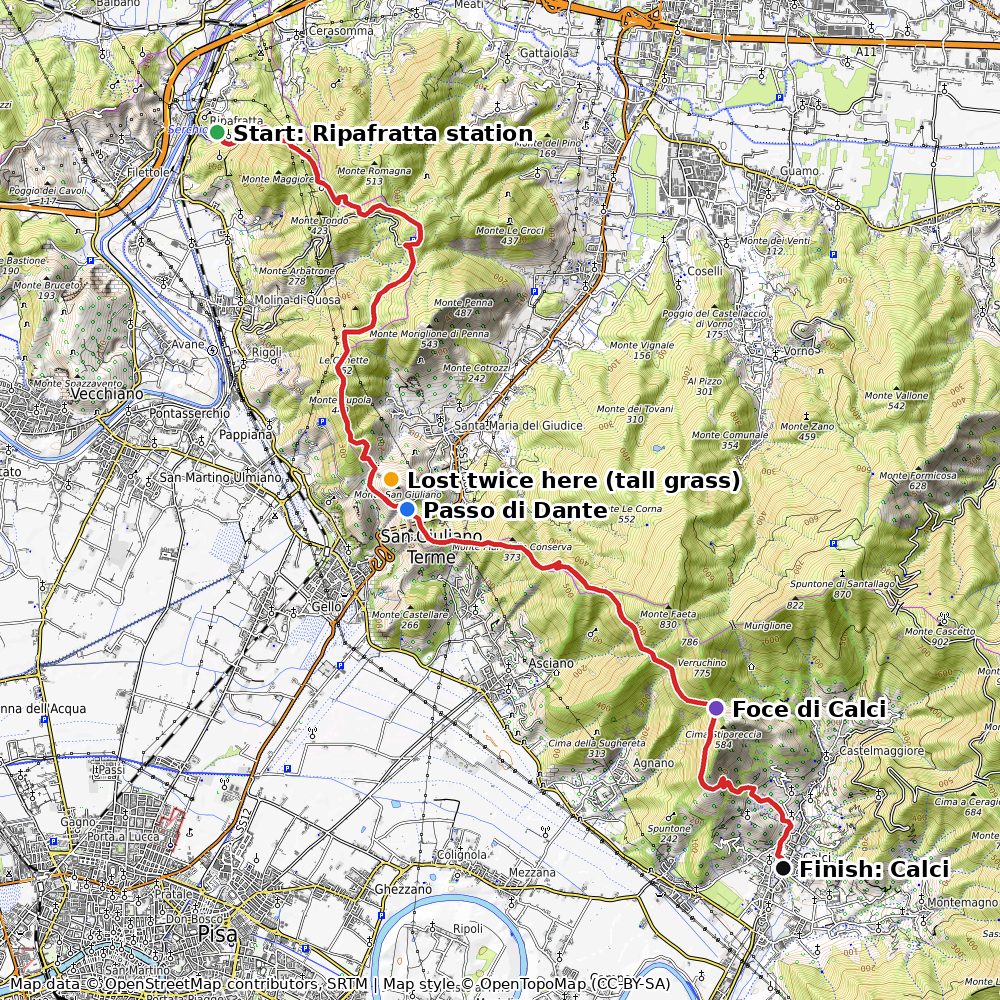
We get off at Ripafratta and the trail starts right there – the path CAI n.00, the Sentiero Pisano (on recent maps you may find it numbered 100), which follows the whole ridge of Monte Pisano. The first climb, above the village and its ruined fortress, is where I saw the last human being of the day. Seriously, not a single person on the trail from there to Calci.
And this is the beauty of starting early. Before 8am I was already near Romagna (7:58am), and the view opened over the plain towards the sea: the Mediterranean shining in the morning light, the island of Gorgona, Elba and, far in the distance, Corsica. On a clear morning it takes your breath away.
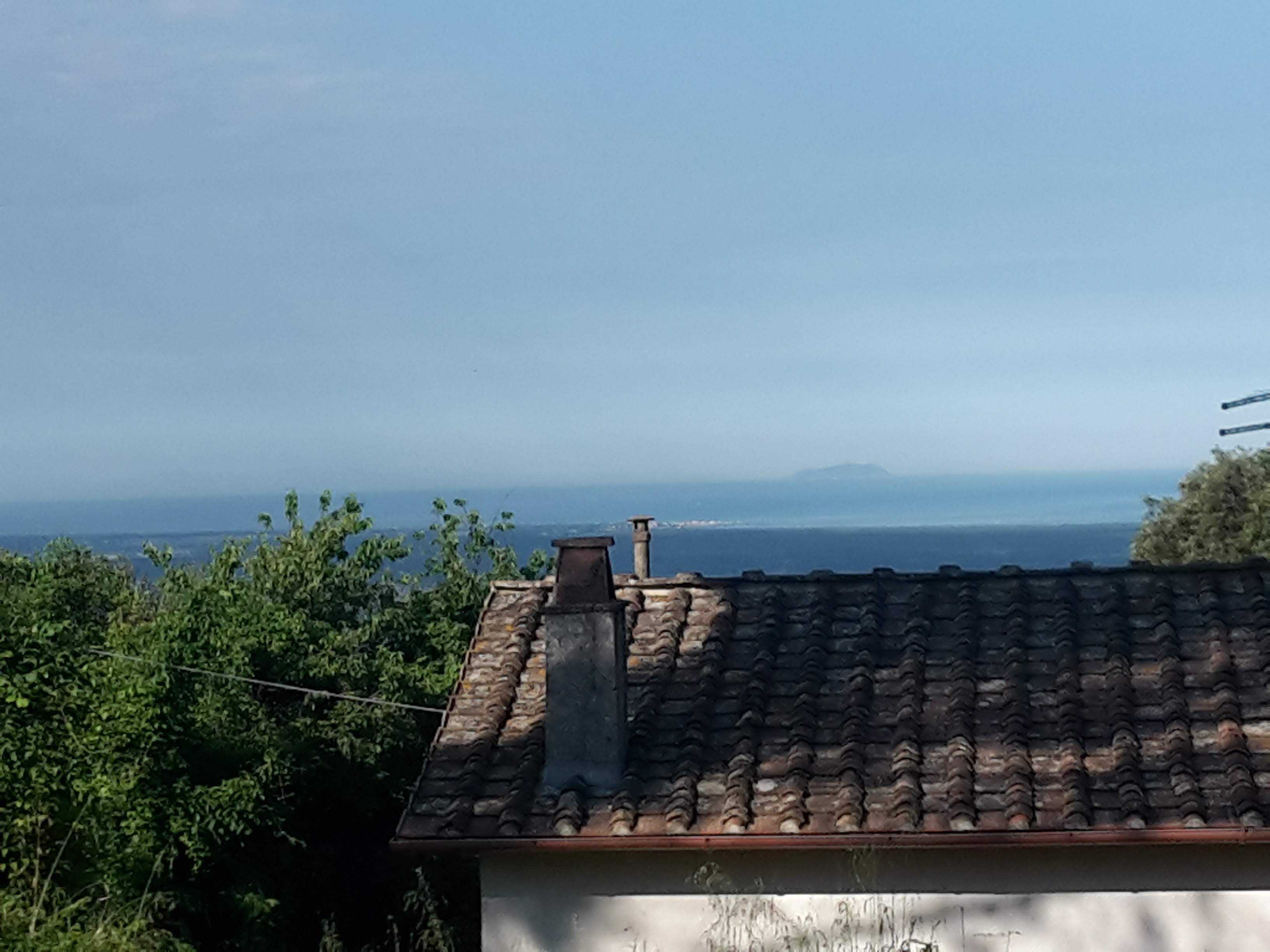
Tall grass, snakes and the Passo di Dante
Let me be honest: this is not an easy hike, and it isn’t the most rewarding one I’ve done either. Much of the ridge is open land, and in June the grass was high – very high. In many parts you can barely see the trail, and you never know when you are going to step on a snake (I saw two during the day). An owl was my only other company.
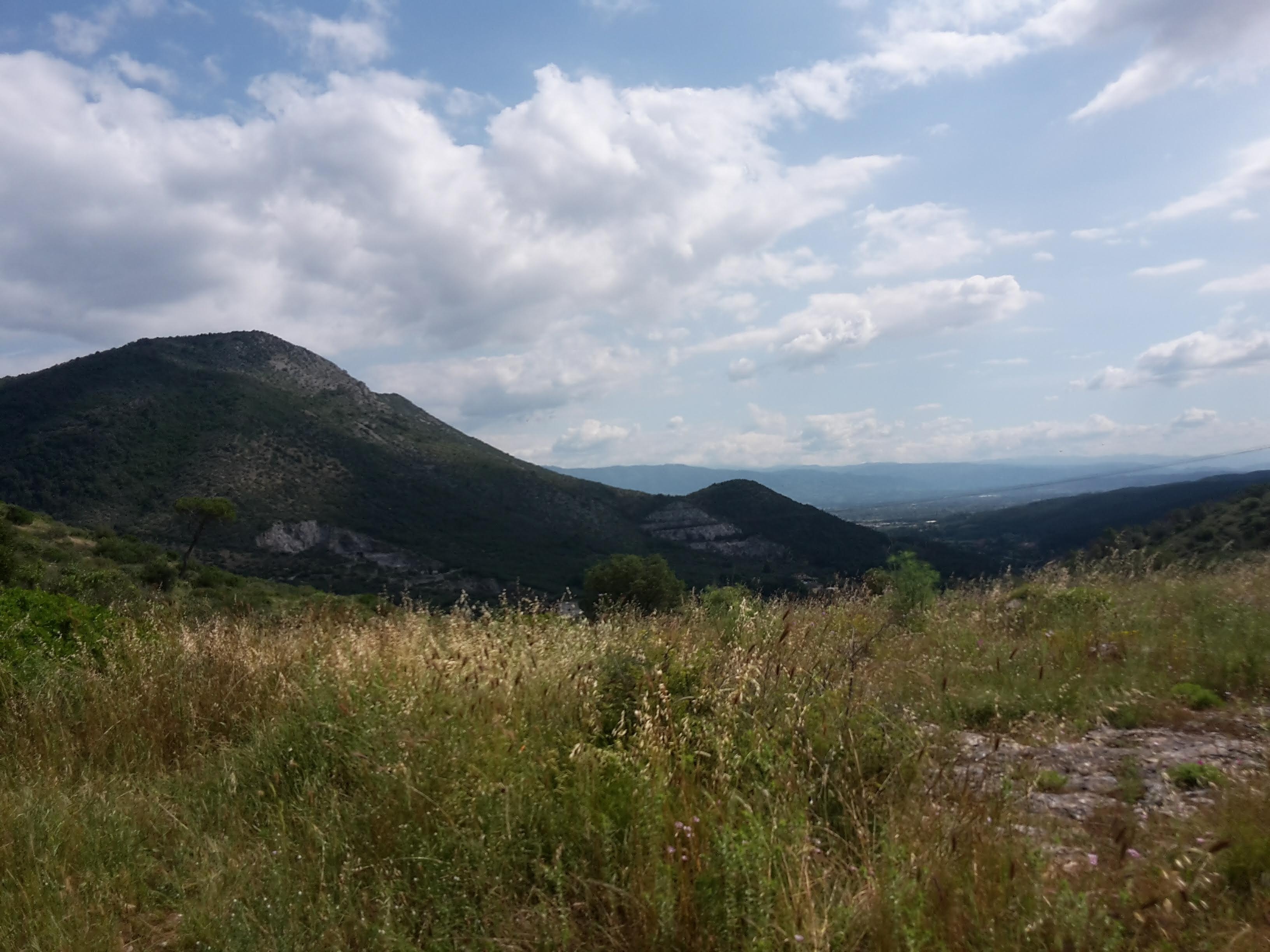
The real trouble came around Passo di Dante. The land is wide open there, the grass covers everything and the red and white markers of the 00 are not clear exactly where you need them. I lost the trail twice. The second time I went all the way down a white gravel road, under the sun already high, thinking I was still on the right path. I almost gave up and walked down to San Giuliano Terme – it was right there. But I turned around, faced that road of white stones reflecting the heat, and climbed back up. Like Dante, I found the diritta via (the straight path) again, towards his Passo. I reached it at 11:10am.
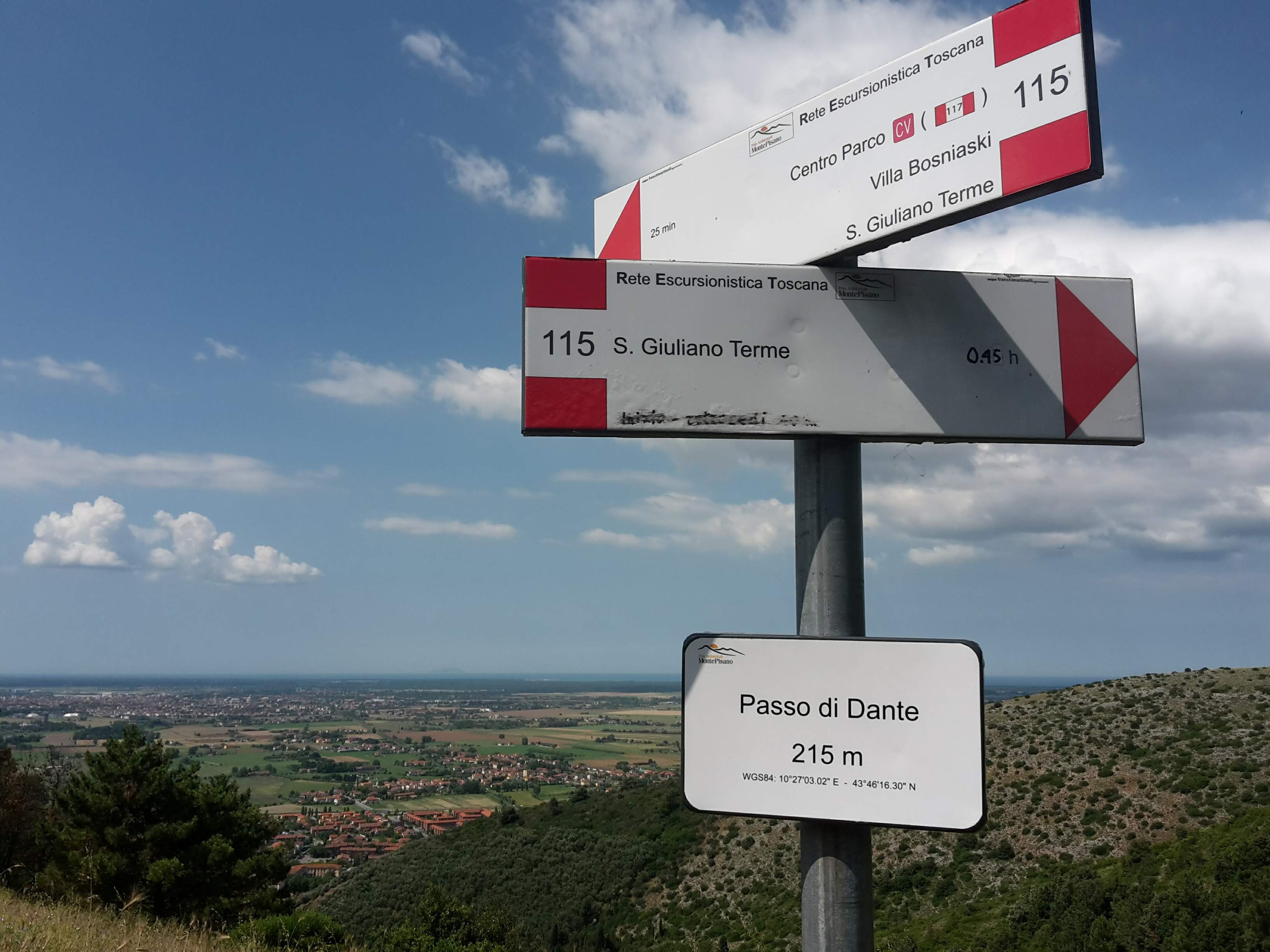
Those detours added more than 4km (2.7mi) to my day, 2km of them going down and up again. You’d probably want to study the map before venturing on it, and carry an offline map on your phone. If the grass is high, slow down at every junction near the pass and look for the next marker before moving on.
From Passo di Dante to Foce di Calci
The damage was done, though. From the pass on, every steep climb with loose stones (sfasciumi, as they say) felt twice as hard. The wooded sections are lovely but short, and the panoramas come and go – but when they come, Pisa and Livorno with the Mediterranean behind them are worth every step.
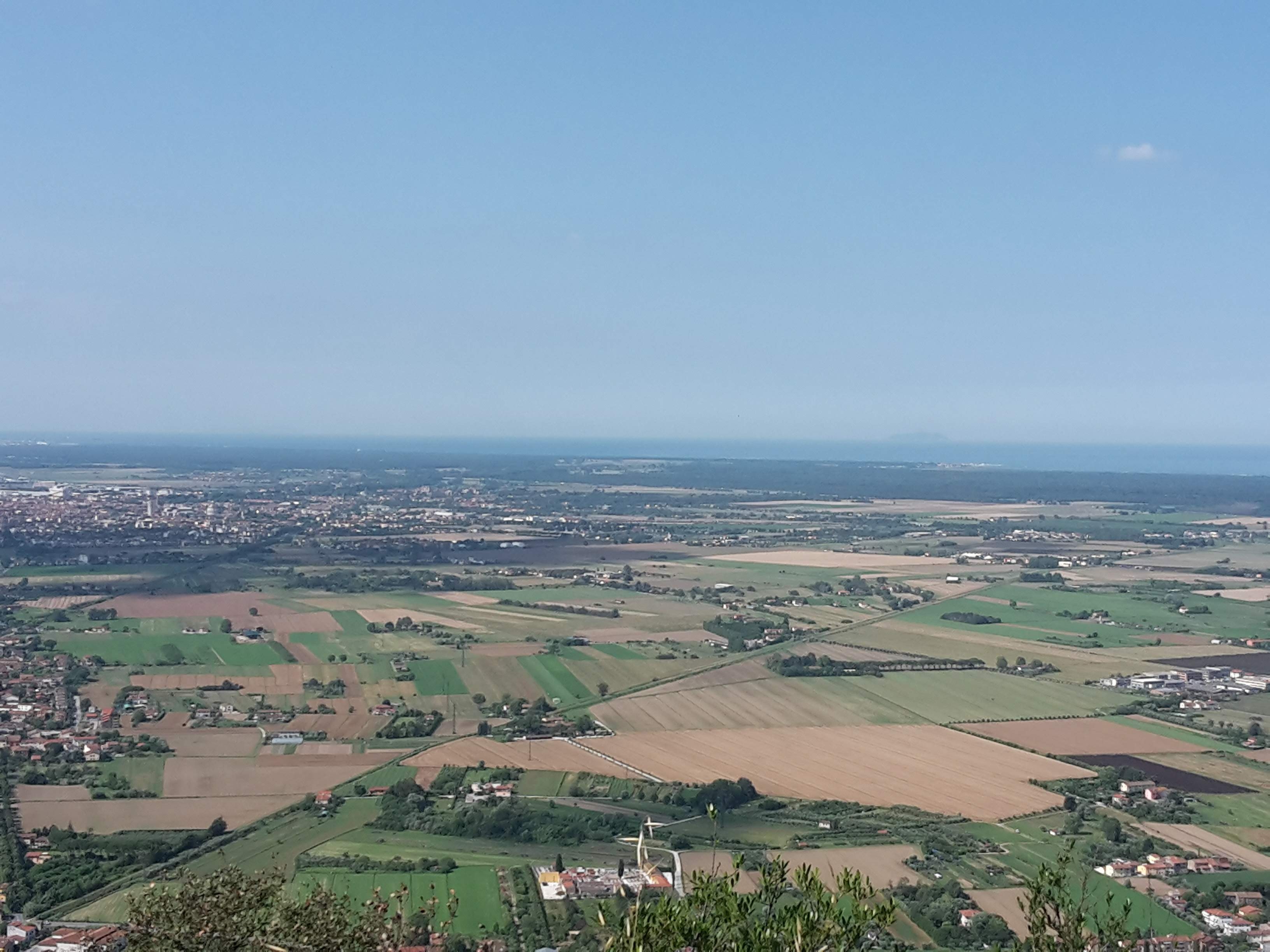
At the Foce di Calci there is a choice: keep climbing towards Monte Faeta (2,723ft / 830m) and Monte Serra (3,009ft / 917m), another 500–600 metres up, or head down to Calci. I chose Calci. The descent is tiring too, at times very steep on narrow paths full of loose stones, so take it slowly.
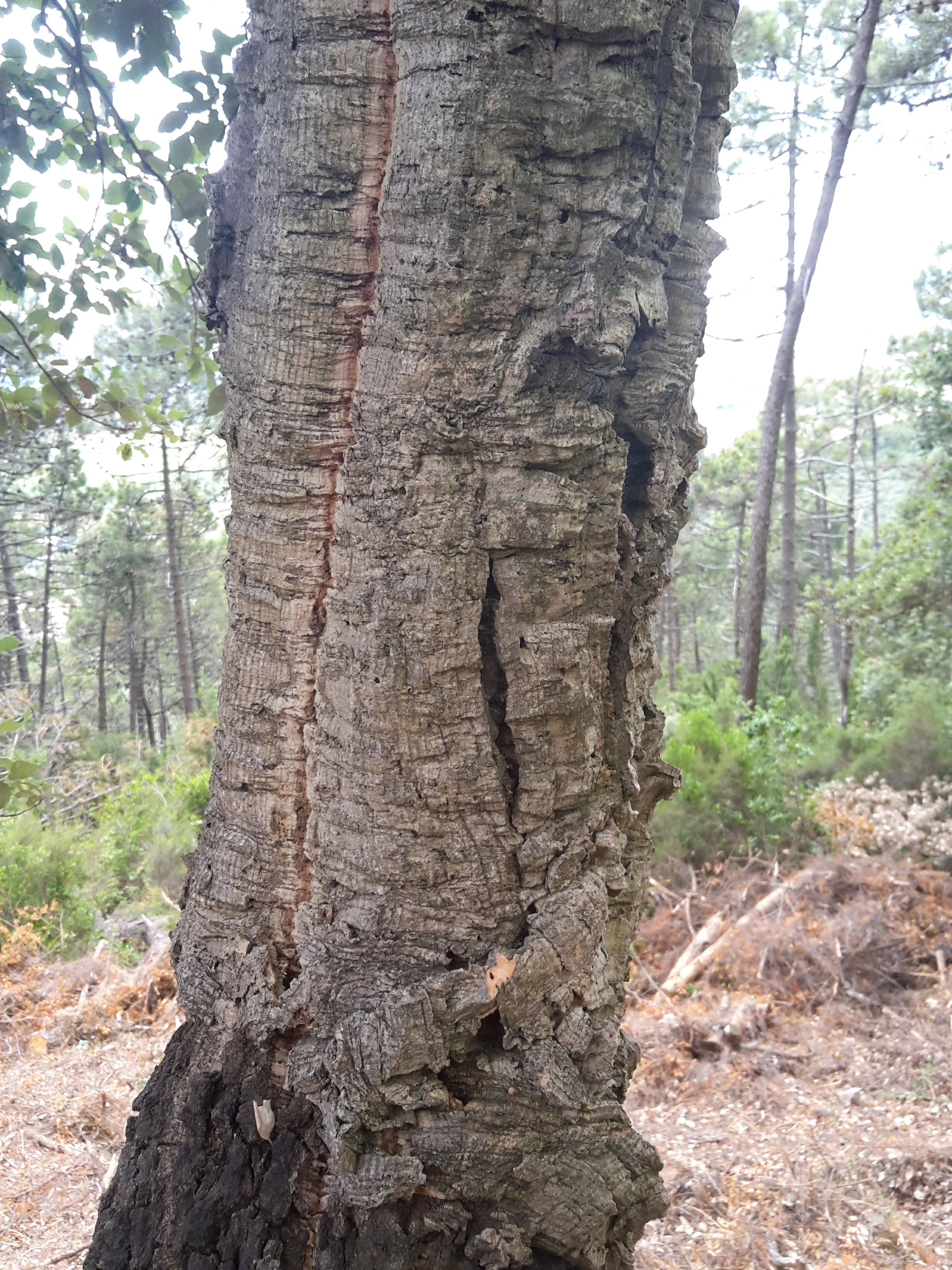
On the way down from Foce di Calci I found some of the most interesting trees of the day: cork oaks – sughere in Italian (Quercus suber). I’m used to thinking of cork as something from Portugal, but here they are, growing on the sunny slopes above Calci. They are evergreen Mediterranean oaks that like warm places and acid soils (they’re rare on limestone), and Monte Pisano suits them. Touch the bark: it’s thick, spongy and full of air, and it works as a natural fireproof coat. On a mountain where, since the 1970s, only about 10% of the land has escaped fire, that matters. After a blaze, a cork oak can sprout again from its branches, and after the big 2018 fire they were among the trees replanted above Calci.
Calci, its Certosa and its Pieve
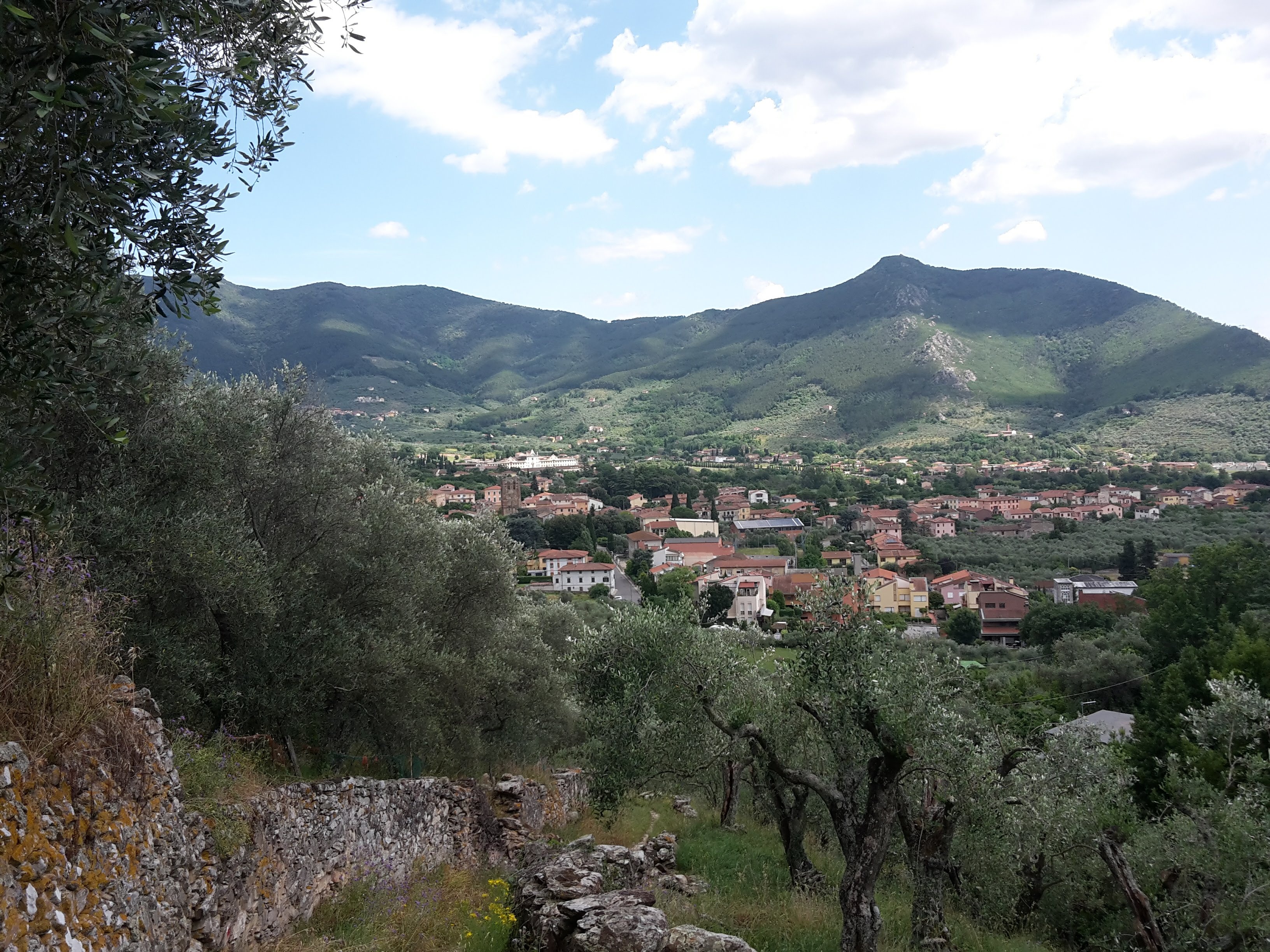
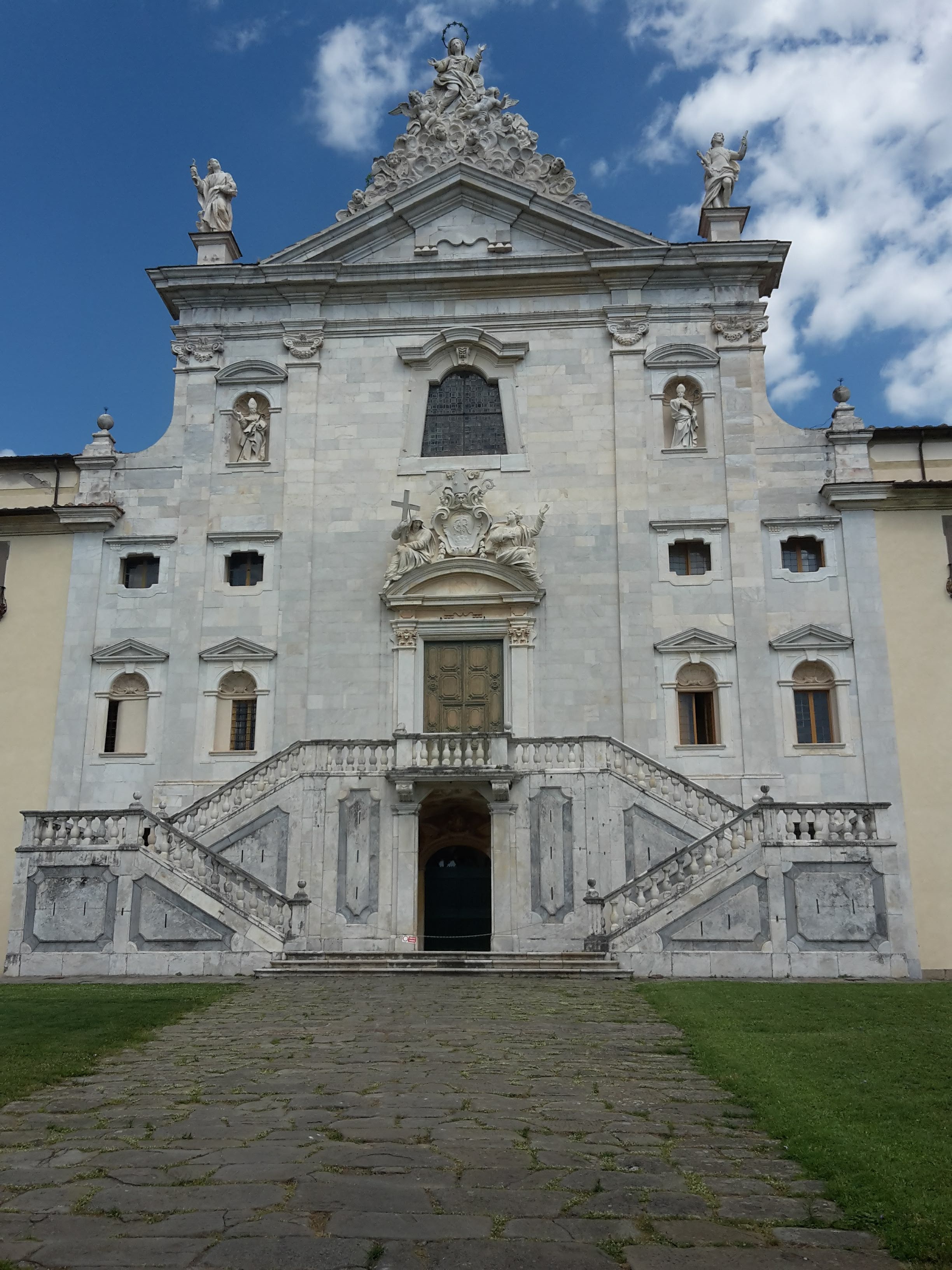
My last lovely memory of the day is seeing Calci from above, with its imposing Certosa (the Carthusian monastery, founded in the XIV Century) and the charming pieve (parish church) of Santi Giovanni ed Ermolao in the center of town. A quick visit, but well deserved. I arrived just after 3pm, eight hours after leaving Ripafratta.
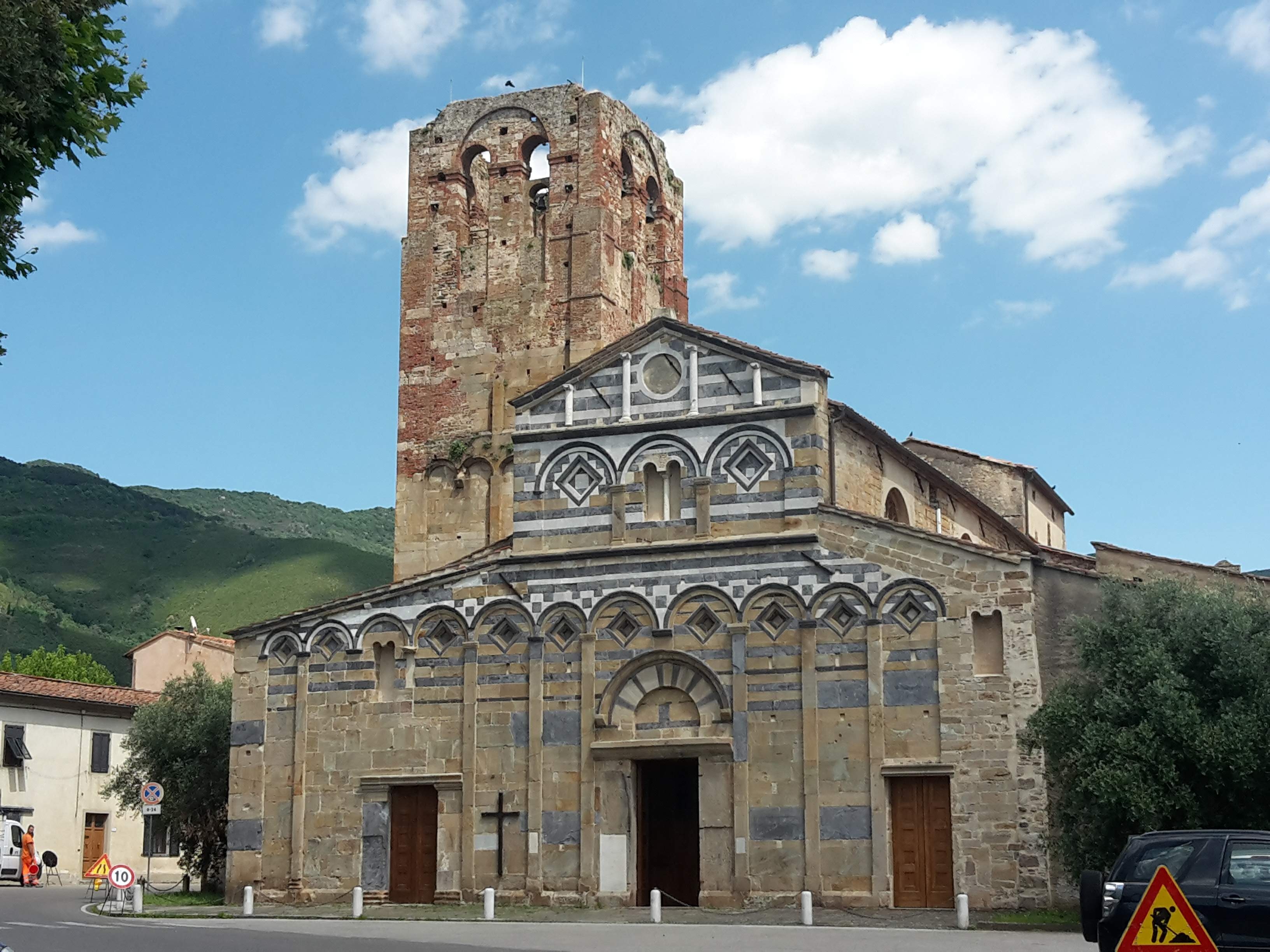
Tired as I was, the pieve deserved a proper look – it’s an exquisite church. It was built around 1100, when Daiberto was archbishop of Pisa, and in 1111 the relics of Saint Ermolao were brought here (an inscription on a pillar of the high altar still records it). The style is Pisan Romanesque, with a facade of blind arches in two orders. Look closely and you’ll notice it isn’t symmetrical: soon after it was built, the left side was extended to cover the chapel with the baptismal font. And that font, from the XII Century, is the real treasure inside – Christ, Saint John the Baptist, the Virgin and two angels, with the river Jordan carved as a human figure. Next to it, the massive square bell tower may once have been a defensive tower (local historians still argue about it).
A word about fire
On 24 September 2018, a huge wildfire started near Calci and burned well over 1,100 hectares (about 2,800 acres) of Monte Pisano, most of it woods on the slopes above the town. The forest is slowly coming back and you will see the signs of it on this side of the mountain.
Fire is a real risk here every summer. In Tuscany the high-risk period normally runs from 1 July to 31 August, but the Region often brings it forward or extends it. During that period you cannot light any fire in the woods, outside of equipped picnic areas. My advice: hike this trail in spring or autumn rather than in high summer, check the daily fire-risk bulletin from LaMMA before you go. If you see smoke or flames, call the regional fire line 800 425 425 or 112.
Getting back
From Calci, bus line 120 of Autolinee Toscane goes to Pisa (Sesta Porta, next to the central station) about every 30–45 minutes on weekdays, with fewer buses on Sundays. You can pay on board with your contactless card or phone: on this line, tap when you get on and again when you get off (if you forget to tap off, you pay the fare to the end of the line). From Pisa Centrale, regional trains take you back to Florence in about an hour.
Was it worth it?
Honestly? The views of the sea and of Pisa are beautiful, and the Certosa of Calci is a lovely finish. But the trail with tall grass and unclear signs at key points made it a harder and less pleasant day than I had expected. Managing expectations is everything. Next time I’ll hike to Monte Serra directly from Calci, maybe on the way to Lucca – and I’ll tell you all about it.
If you want an easier first taste of Monte Pisano, start with my walk from Lucca along the Nottolini aqueduct to Vorno. And for more ideas, see my guide to day hikes from Florence without a car.
I hope you enjoyed reading this post! Have you hiked the Sentiero Pisano, or found the markers around Passo di Dante? Let me know in the comments how it went – and how I can improve this post.
Ripafratta – Passo di Dante – Foce di Calci – Calci
8h (7:01am – 3:05pm)
16.5mi (26.5km), including 2.7mi (4.3km) of getting lost; the planned route is 13.8mi (22.2km)
Elevation gain: about 3,200ft (970m) on the planned route
Arrive: by train to Ripafratta (from Florence via Lucca)
Depart: by bus 120 from Calci to Pisa, then train to Florence
Bus and train timetables in Tuscany change often. If you find a line has changed or a stop has moved, please let other hikers know in the comments below!


Leave a Reply