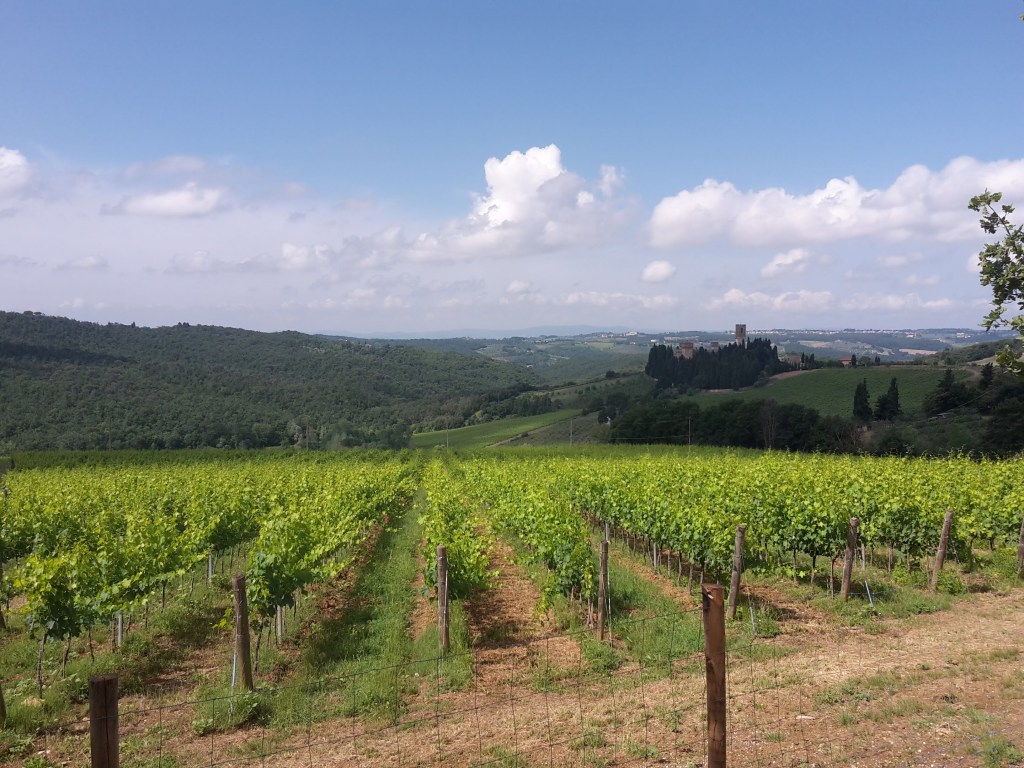
On a June morning I woke up at 5 am to catch the first bus to San Casciano in Val di Pesa, the gateway to the Chianti hills just south of Florence. The plan: walk across the vineyards to Badia a Passignano, one of the most beautiful abbeys in Tuscany, and on to Greve in Chianti, then take the bus home. About 21.6 km (13.4 mi) if you stay on the right roads – with my wrong turn I walked closer to 24 km (15 mi) – all of it on foot from one Chianti town to another.
The trip started the Italian way. The driver had run out of tickets, so he stopped at a bar on the way out of Galluzzo so I could buy one. È, siamo in Italia… The road was very quiet at that hour and we reached San Casciano without any trouble. (That was before Tap & Go. Today you can just tap your contactless card on the reader on board, more on that at the end.)
San Casciano and the wrong turn
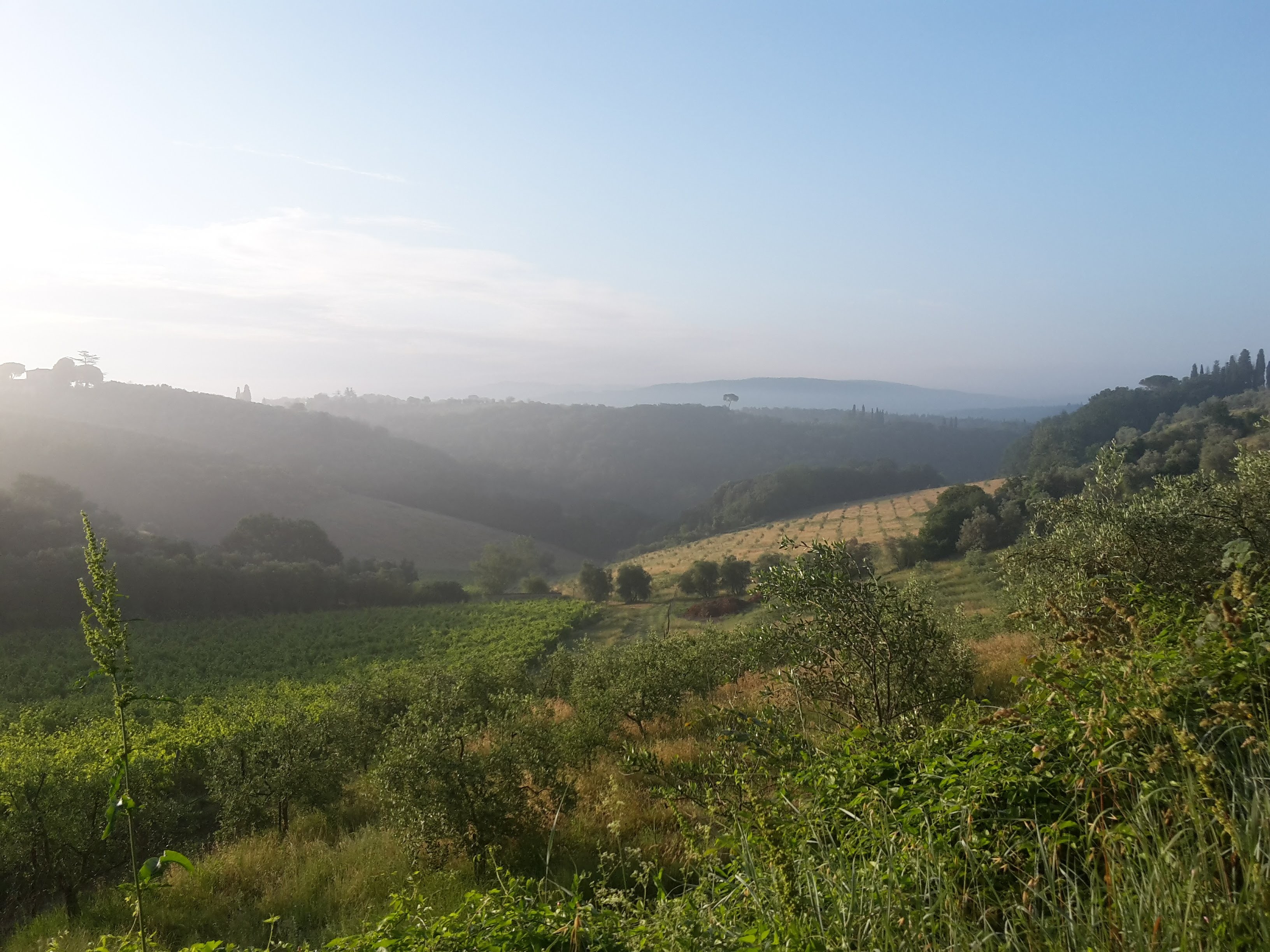
A panino and a caffè at a local bar, and I was ready to go. Honest warning: unfortunately, I made a lot of mistakes in the first stretch. I took a longer way than needed to reach the SP Grevigiana, the road toward Mercatale. Then a couple of dogs barking at Villa Le Corti broke my concentration, and instead of staying on the SP Grevigiana I turned down Via San Piero di Sotto. I went all the way to the end, past riding tracks and horses grazing in the fields, and arrived at a gate locked with chains and a padlock. It didn’t feel right to climb over it, and there was no guarantee I would find the way again on the other side. So I turned back.
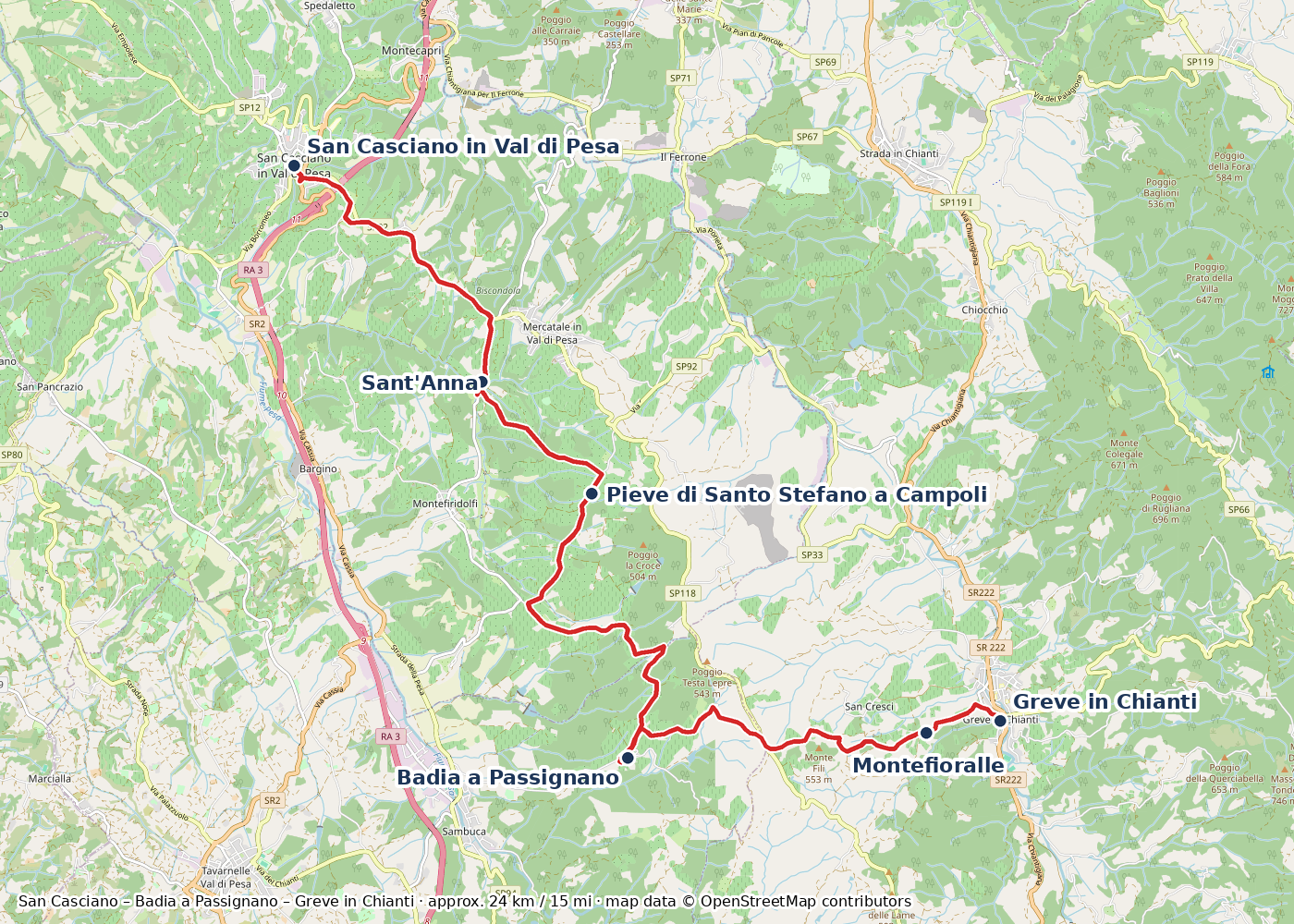
I almost gave up on the whole route right there. But I found another path heading toward the Terzona stream and decided to give it a try. Mud and puddles, and I was a little worried about running into wild boar: it was early morning, and the water running along the path gave them plenty of chances for a drink. In the end, no boar. Better: an eagle, a red roe deer and a pair of hoopoes, and I even found one of their feathers. So if you walk this, stay on the SP Grevigiana at Villa Le Corti – don’t turn down Via San Piero di Sotto – and you’ll avoid the locked gate (the map at the end of this post helps).
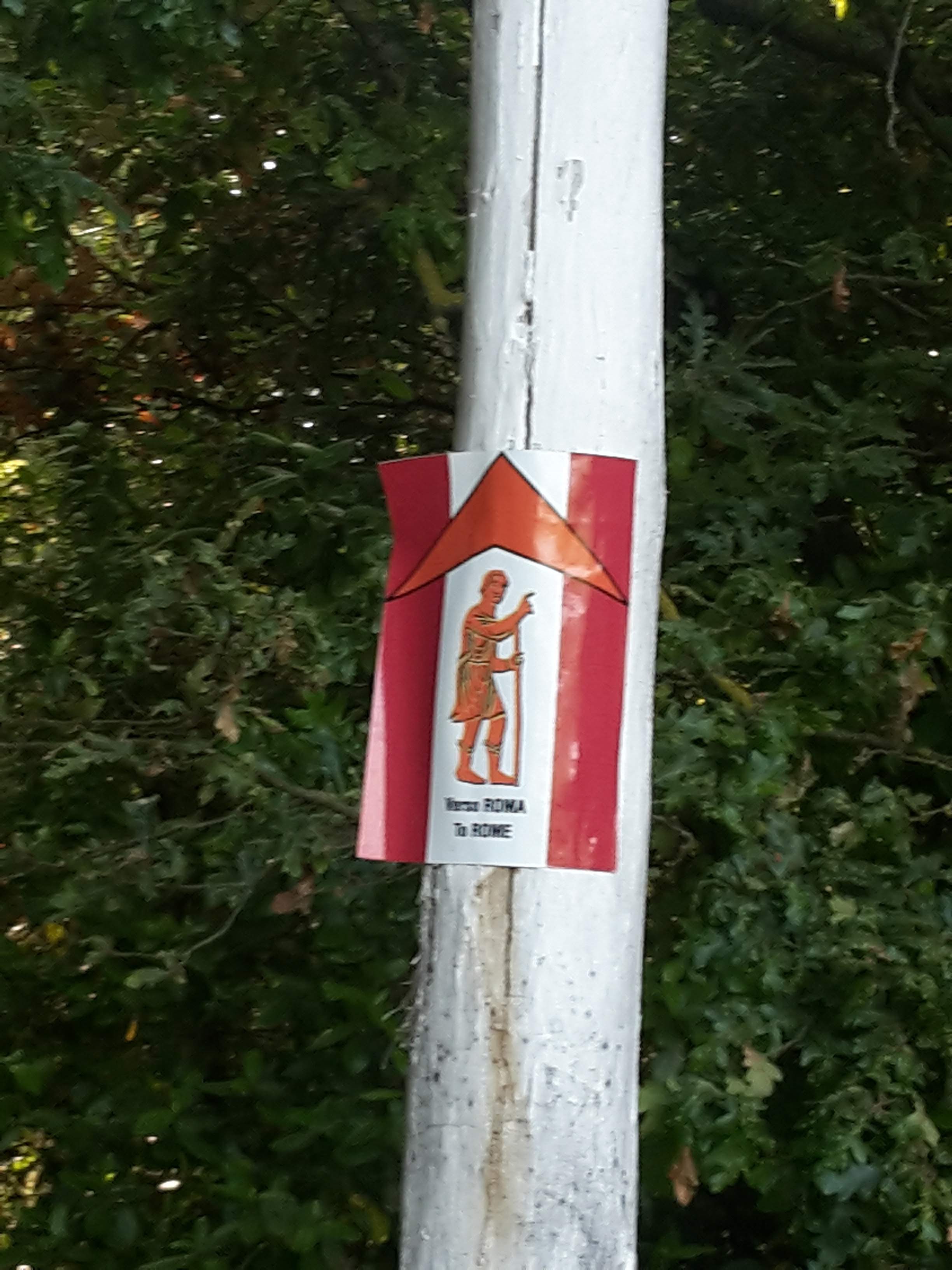
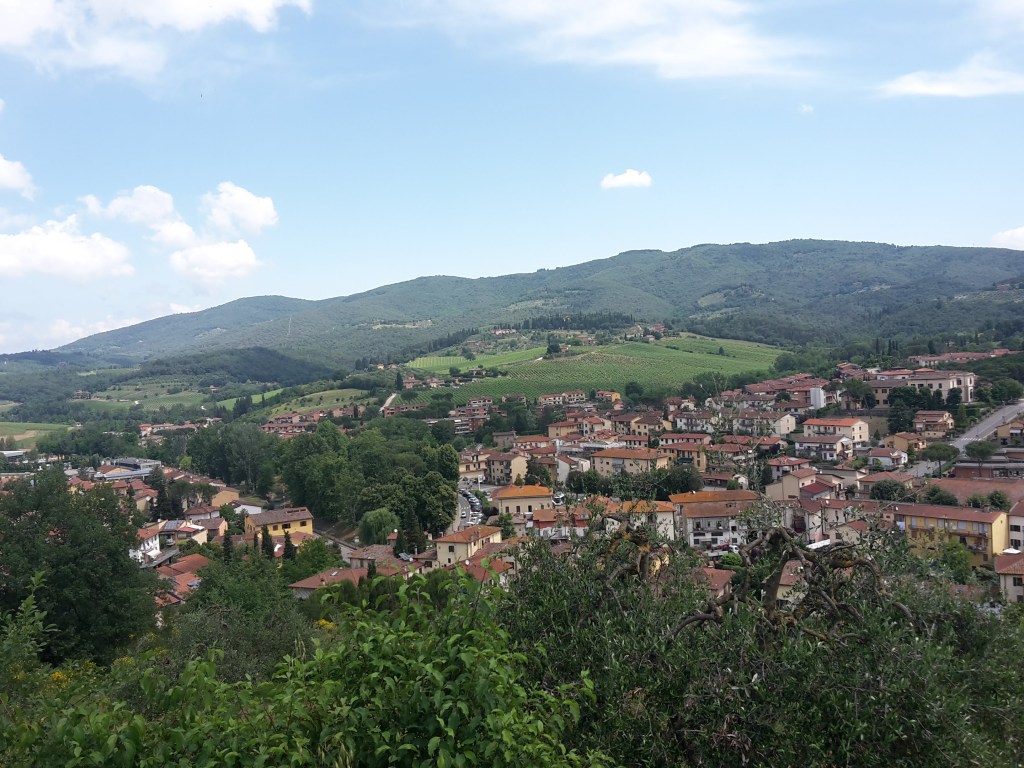
At Sant’Anna the road climbs hard up Via Vallacchio. But I felt good, my legs ready for the exercise. Here the waymarks of the Via Romea del Chianti, the old pilgrim route from Florence toward Siena, were easy to see. And the views were a big reward: vineyards in a spectacular green, old farmhouses, the Pieve di Santo Stefano a Campoli, an old country parish church, and San Casciano, now far behind on its hill.
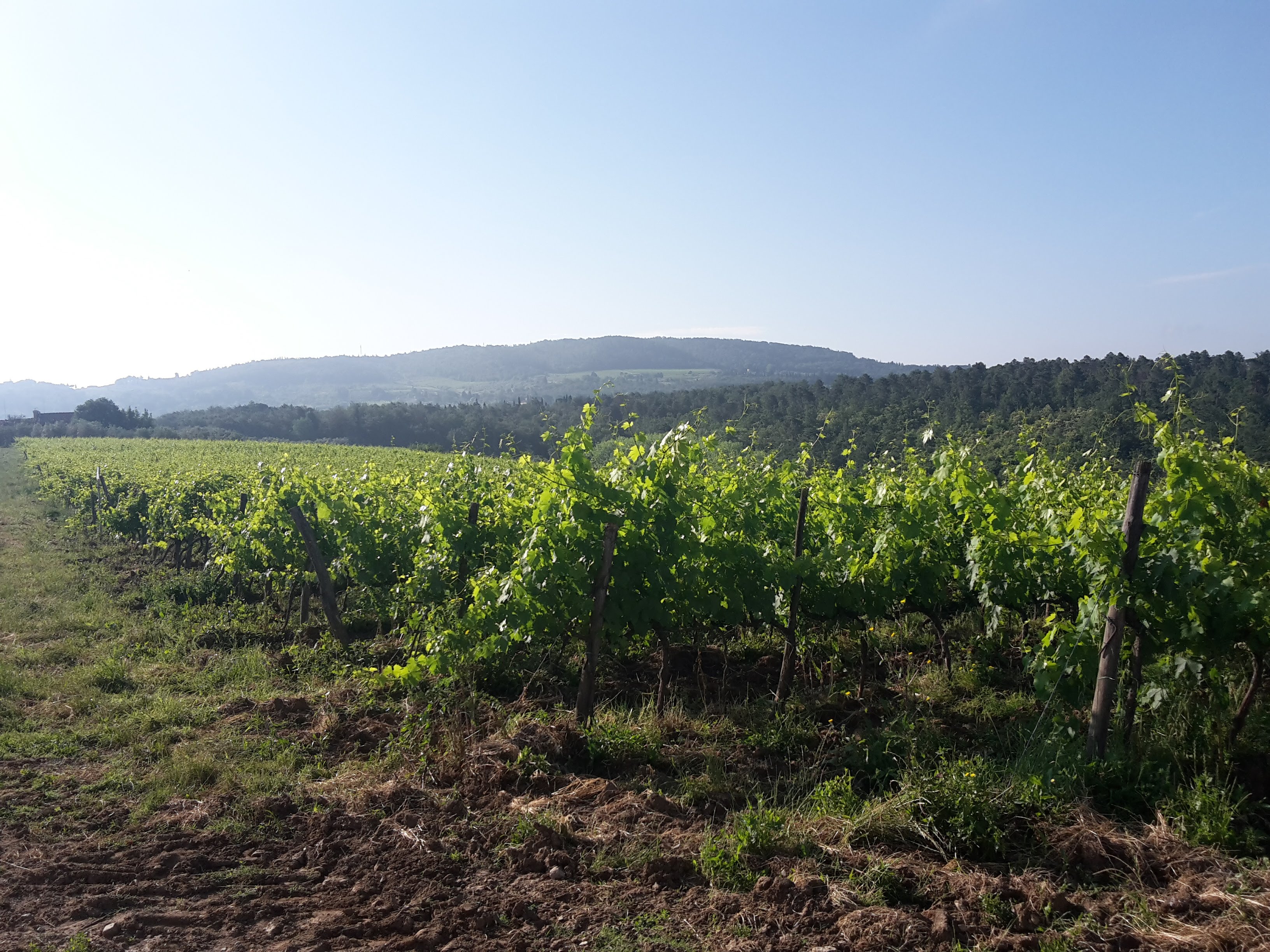
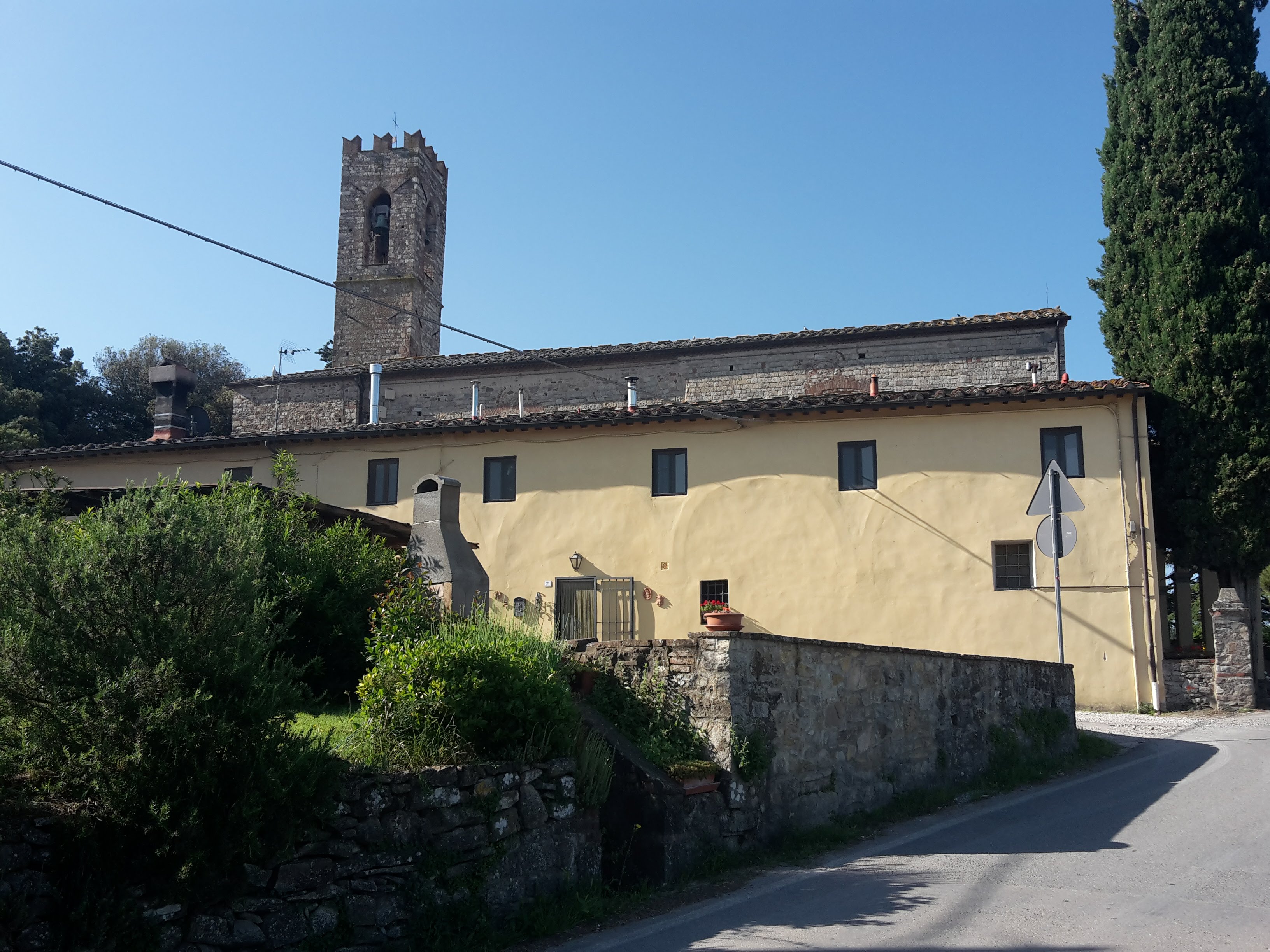
Every now and then I stopped to admire it all, and I realized, as happens to me more and more often, that I spend a lot of quality time in one of the most wonderful places in the world. People come from everywhere and spend a lot of money to stay here for a few days, and I got to live here and enjoy all that the countryside has to offer. Really something to meditate on.
Badia a Passignano
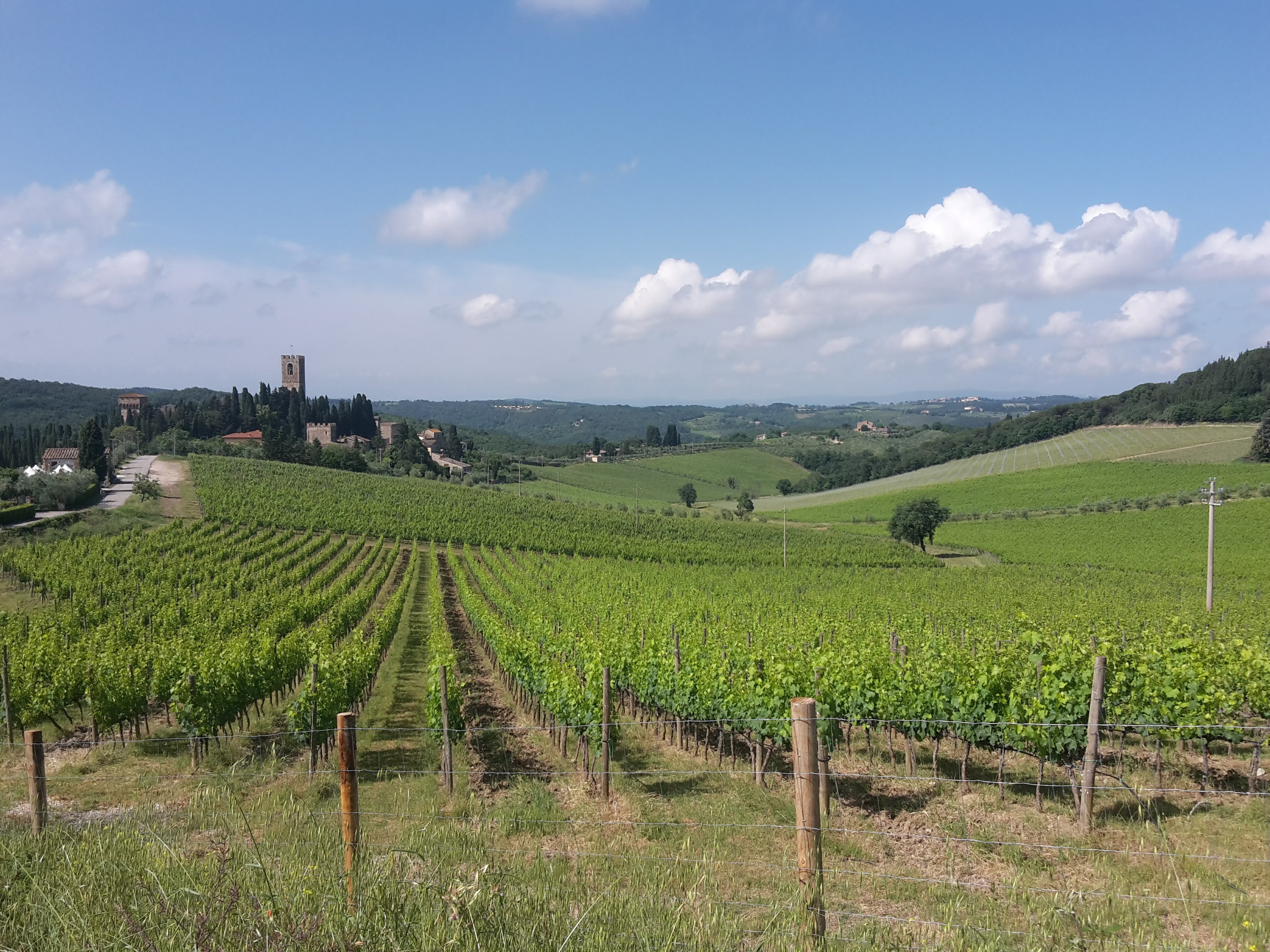
The beauty went on all the way to Badia a Passignano, where the magic of the scenery grows with the enchanting abbey. I arrived just as the bells rang ten o’clock, and on that pleasant spring morning I felt a divine joy and fullness. The building and its towers are impressive, and the little dome is very graceful, like a mini version of the dome of Santo Spirito in Florence.
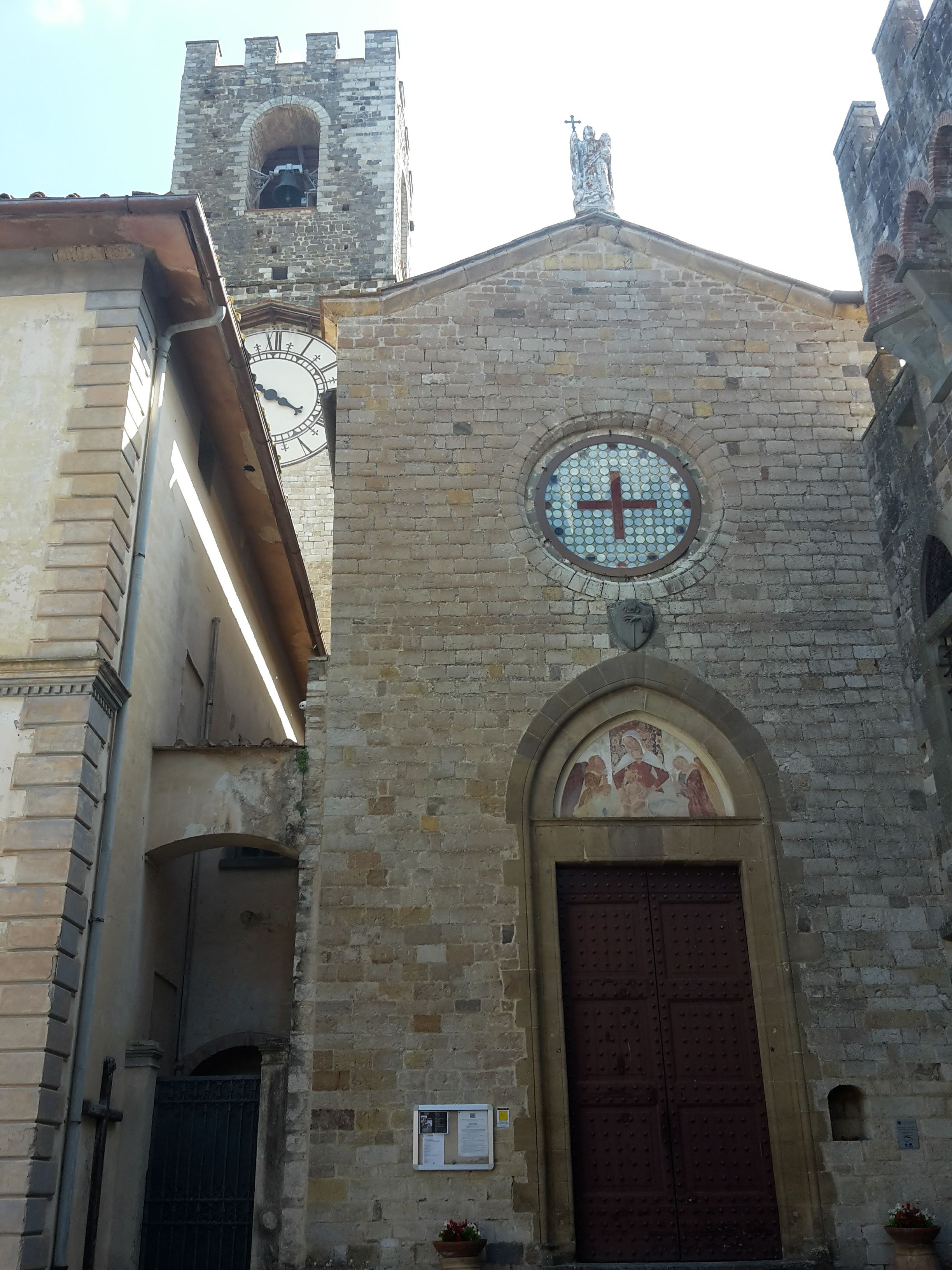
A bit of history: Badia a Passignano is a monastery of the Vallombrosan monks, a Benedictine order founded by the Florentine saint Giovanni Gualberto, who died here in 1073 and is buried in the church. From the outside it looks more like a castle than an abbey. The 15th-century walls with corner towers kept the monks safe on the old border between Florence and Siena, and the neo-Gothic touches came in the 19th century, after the monks were sent away and the place became a private villa. The monks only came back in 1986.
Inside is the refectory with the Ultima Cena (Last Supper) that Domenico Ghirlandaio painted with his brother Davide in 1476. And a colorful detail: the painter Domenico Cresti, born in Passignano, was so attached to it that he went down in history simply as “il Passignano”. Around 1600 he redesigned the church and its dome, the one I liked so much. Even Galileo Galilei came here as a young man, in 1588, to teach mathematics to the novices.
If you want to see the inside (and you should), the monks run guided visits at specific times of the church, cloister, refectory and old kitchen, in Italian and English, by booking only. The abbey is closed on Tuesdays. Check the abbey’s official page and book before you go.
Montefioralle and Greve
Greve wasn’t far now, but one more surprise was waiting for me: Montefioralle. One of the most beautiful villages in Italy, as the road signs announce (it’s a member of I Borghi più belli d’Italia). Truly delightful, with swallows building their nests under the beams of the houses in the little covered lanes.
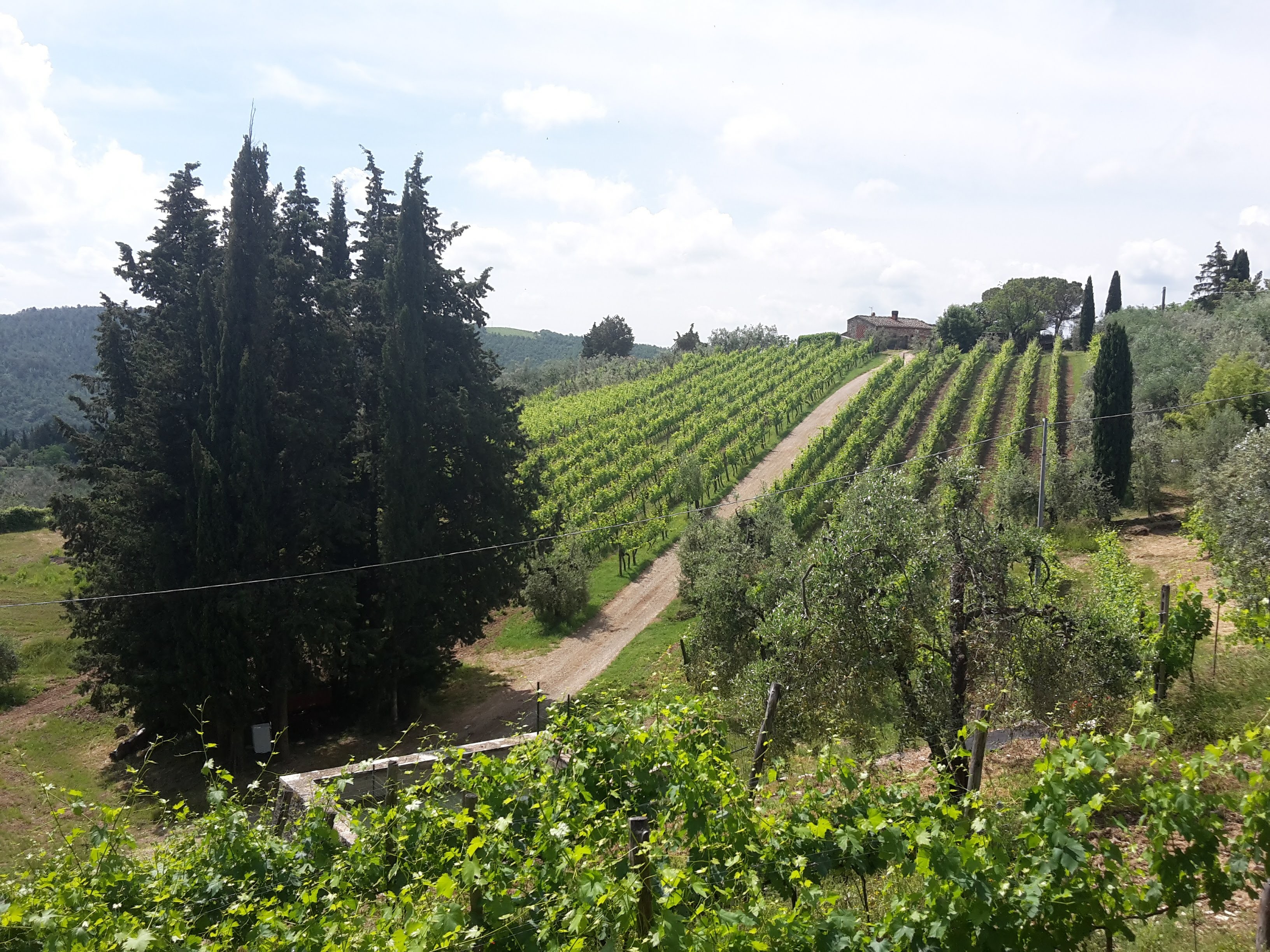
I got to Montefioralle at 11:30 am. A quick visit to the church of Santo Stefano, and a stop at the village fountain to refill my water bottle, enjoying the peace of the place, even if tourists and groups on bikes were already starting to arrive.
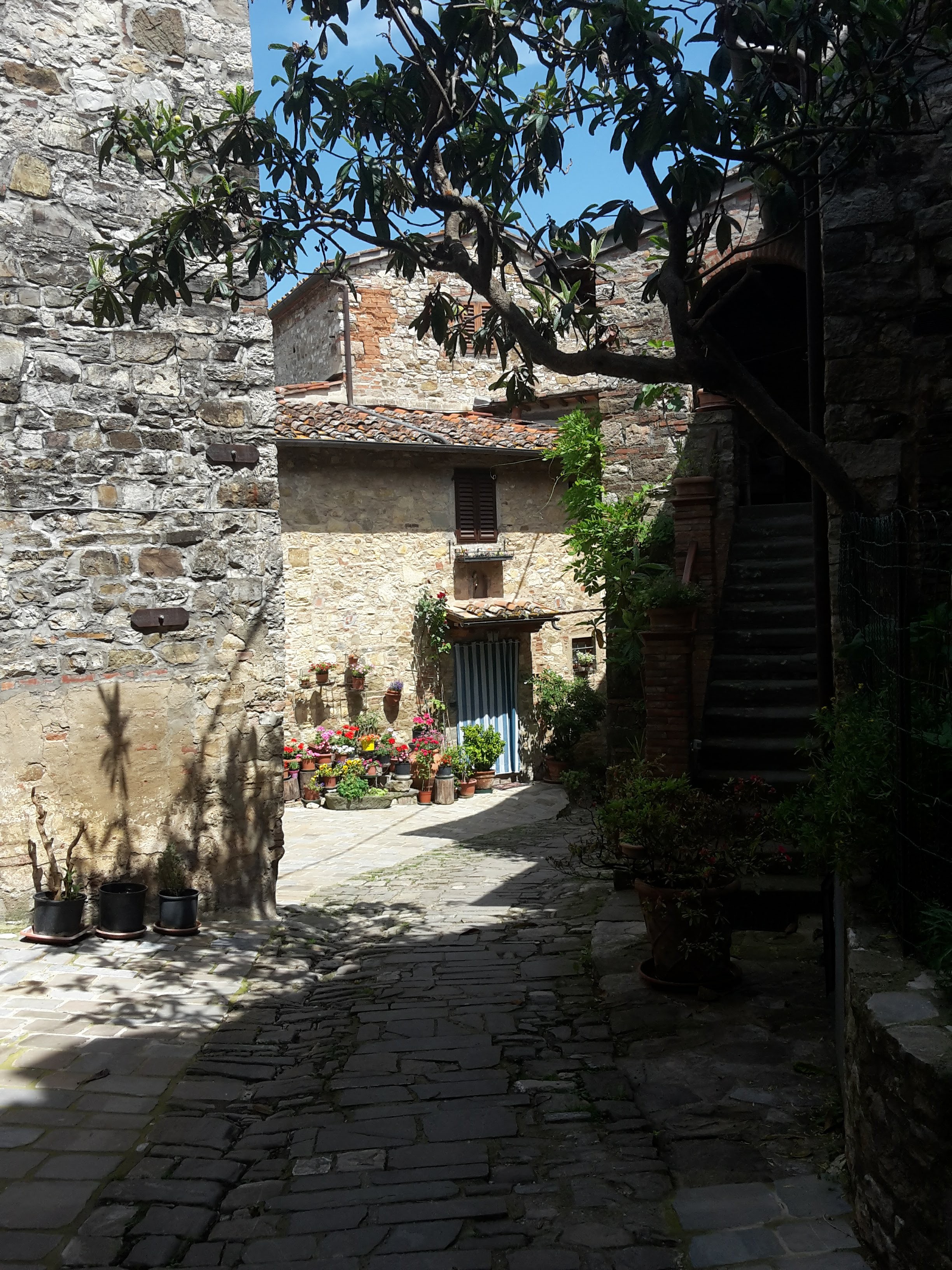
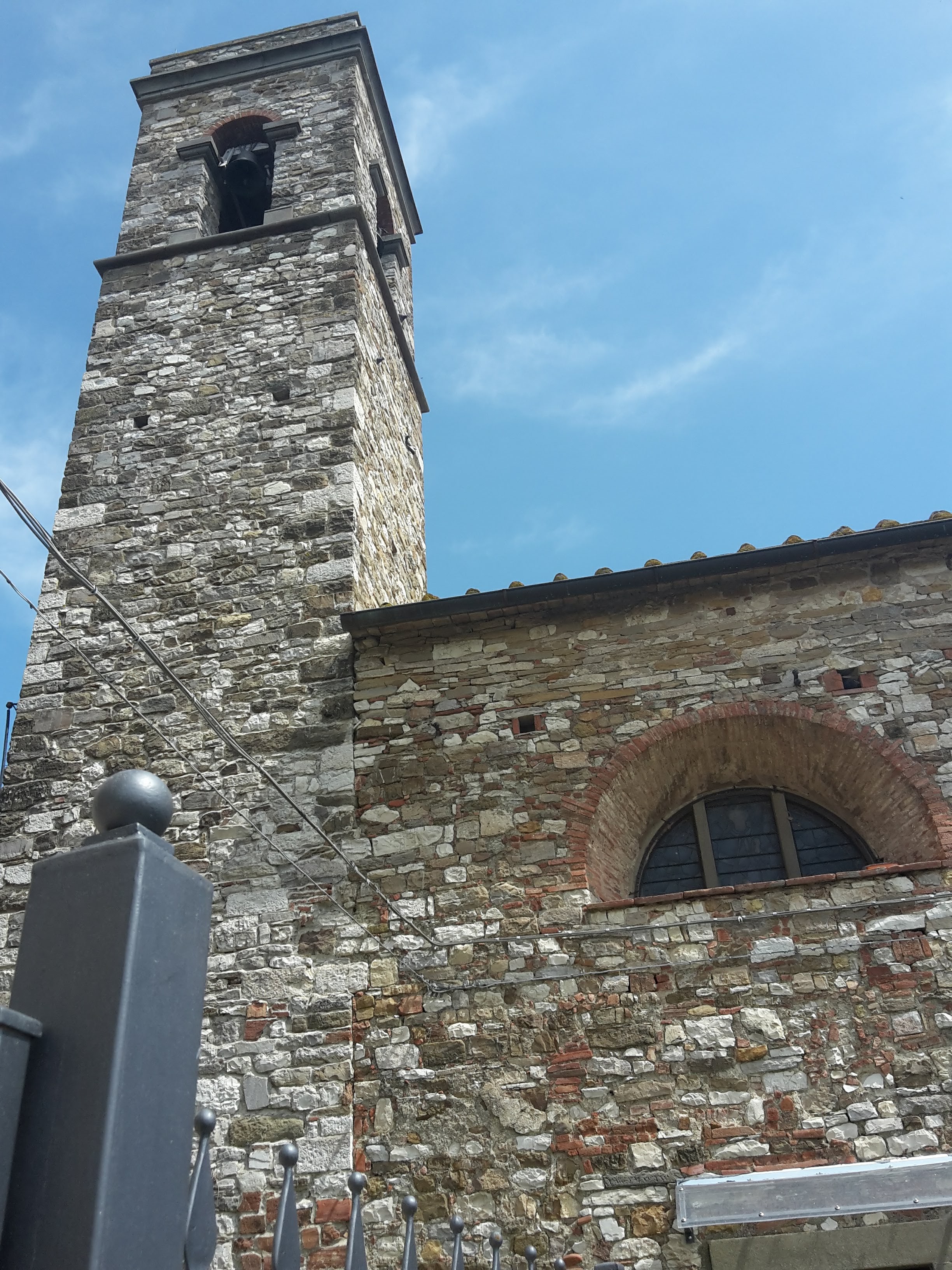
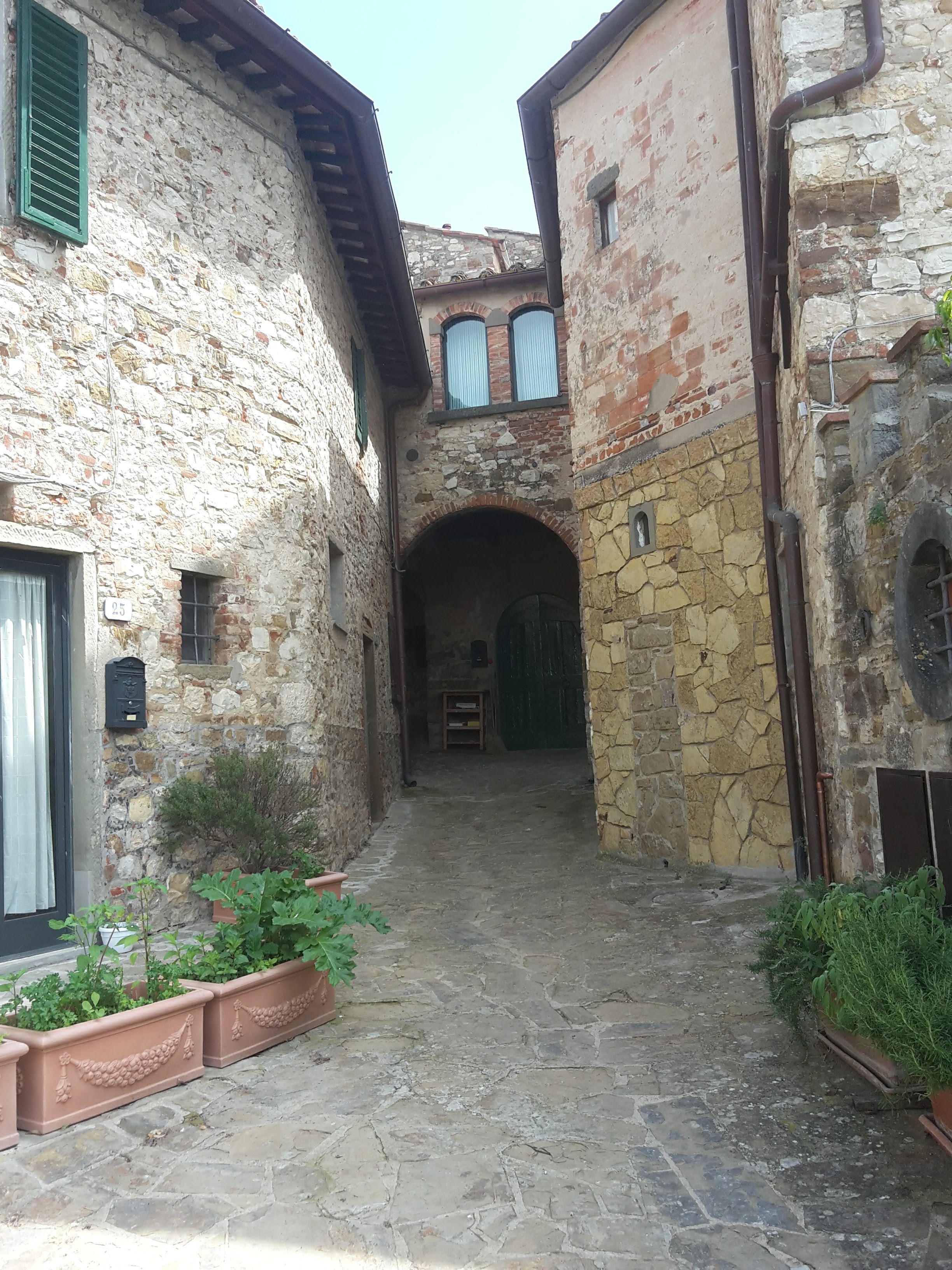
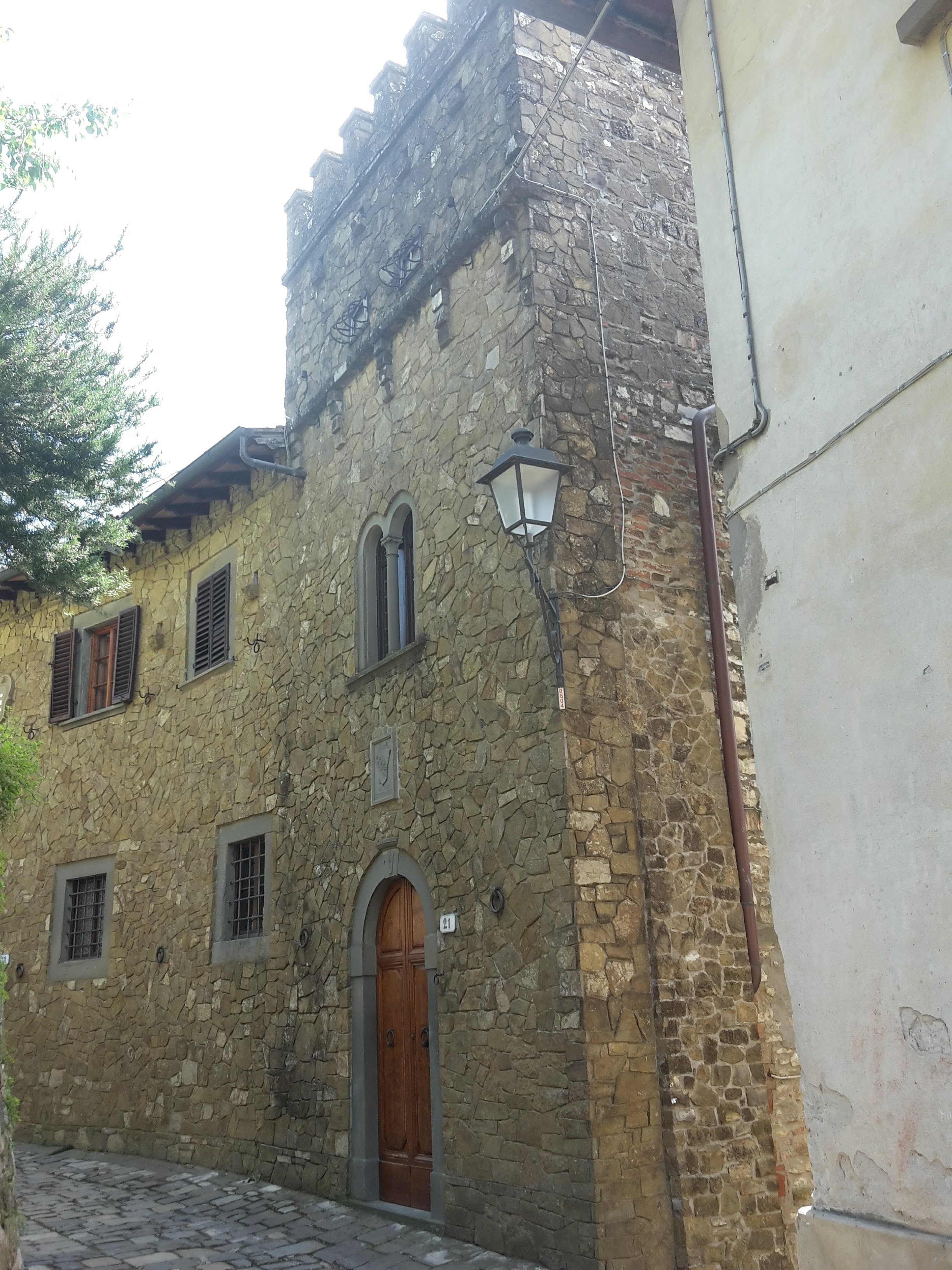
That tower-house on the circular lane, the one with the carved wasp – vespa – over the door, once belonged to the family of Amerigo Vespucci, the Florentine navigator the American continent was named after. In 1507 a German mapmaker, Martin Waldseemüller, wrote “America” on his world map, after Vespucci’s voyages of 1499 to 1502, when he argued that the lands across the ocean were a new continent, not Asia.
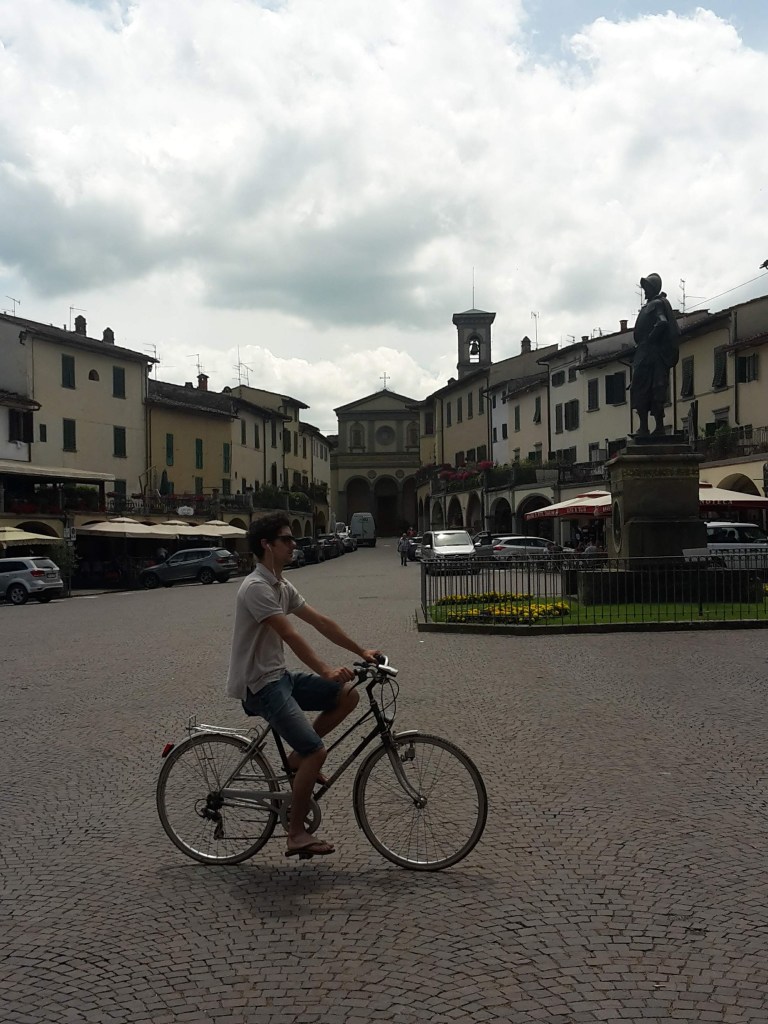
From there, another fifteen minutes or so, gently downhill, and we are in Piazza Matteotti, the main square of Greve in Chianti, at noon. Right in the middle stands a bronze statue of Giovanni da Verrazzano, the navigator born nearby at Castello di Verrazzano. In 1524, sailing for the French king Francis I, he was the first European to explore New York Bay. The Verrazzano-Narrows Bridge, between Staten Island and Brooklyn, was named after him.
However, my visit to Greve was very short, because I decided to catch the first bus back to Florence, via Strada in Chianti. A great way to end the walk, with more wonderful views of the Chianti from the window. If you have a little more time than I did that day, stop at the famous Antica Macelleria Falorni under the loggias. It’s a centuries-old butcher shop, and a great place for a quick snack of salumi di cinghiale, the local wild boar salami.
Overall, the scenery is gorgeous, and Badia a Passignano and Montefioralle alone are worth the early alarm. But there’s a lot of asphalt and very little woods, and with all the farms and vineyards there’s little shade, so a cloudy day would be better than a sunny one (bring plenty of water, and refill in Montefioralle). Next time I might start from Mercatale in Val di Pesa or Montefiridolfi instead, which would also skip the part where I got lost.
If you like this kind of walk, my Galluzzo to Impruneta hike starts from the same road out of Florence, and part 3 of the Renaissance Ring crosses more of the Chianti hills. For more ideas, see my guide to day hikes from Florence without a car.
San Casciano in Val di Pesa – Sant’Anna – Santo Stefano a Campoli – Badia a Passignano – Montefioralle – Greve in Chianti
Duration: 5h45 (6:15 am to noon, including my detour)
Distance: about 21.6 km (13.4 mi), or closer to 24 km (15 mi) with my detour
Elevation gain: about 720 m (2,350 ft) of ascent and 770 m (2,540 ft) of descent
Highest point: about 513 m (1,680 ft); the route runs between about 230 m (750 ft) at Greve and this high point
Terrain: mostly country roads, asphalt and gravel, with a short muddy path along the Terzona stream; little shade
Trails: Via Romea del Chianti to Badia a Passignano (waymarks from Sant’Anna), then Via di San Cresci to Greve in Chianti
Water: fountain in Montefioralle
Arrive: by Autolinee Toscane bus from Florence to SAN CASCIANO Autostazione. Lines 370 and 368 leave from Terminal Vittorio Veneto (near the Cascine), with stops at Stazione Leopolda, Porta Romana and Galluzzo; line 371 goes via Scandicci.
Depart: by bus 365 from Greve (GREVE PIAZZA TRENTO, a short walk from Piazza Matteotti) via Strada in Chianti to Florence, FIRENZE HUB Montelungo near Santa Maria Novella station, in about 50–55 minutes. Buses run through the day on weekdays, but only six times on Sundays and holidays, so check the last one back.
Tickets: the easiest way is to tap a contactless bank card (or your phone) on the validator when you get on, and tap again when you get off: on intercity buses like these the fare depends on distance, and if you forget to tap out you pay the fare to the end of the line. You can also buy tickets in the at bus app before boarding. Buying from the driver costs more. Timetables: at-bus.it.
Timetables change often. If you find a change in the bus times, please let me know in the comments so other hikers can plan ahead.
I hope you enjoyed reading this post! Have you walked in the Chianti between San Casciano, Passignano and Greve, or visited the abbey? Tell me in the comments which way you went, and let me know how I can improve this guide. Thank you for reading!


Leave a Reply